

Brown Fish Owl
Ketupa zeylonensis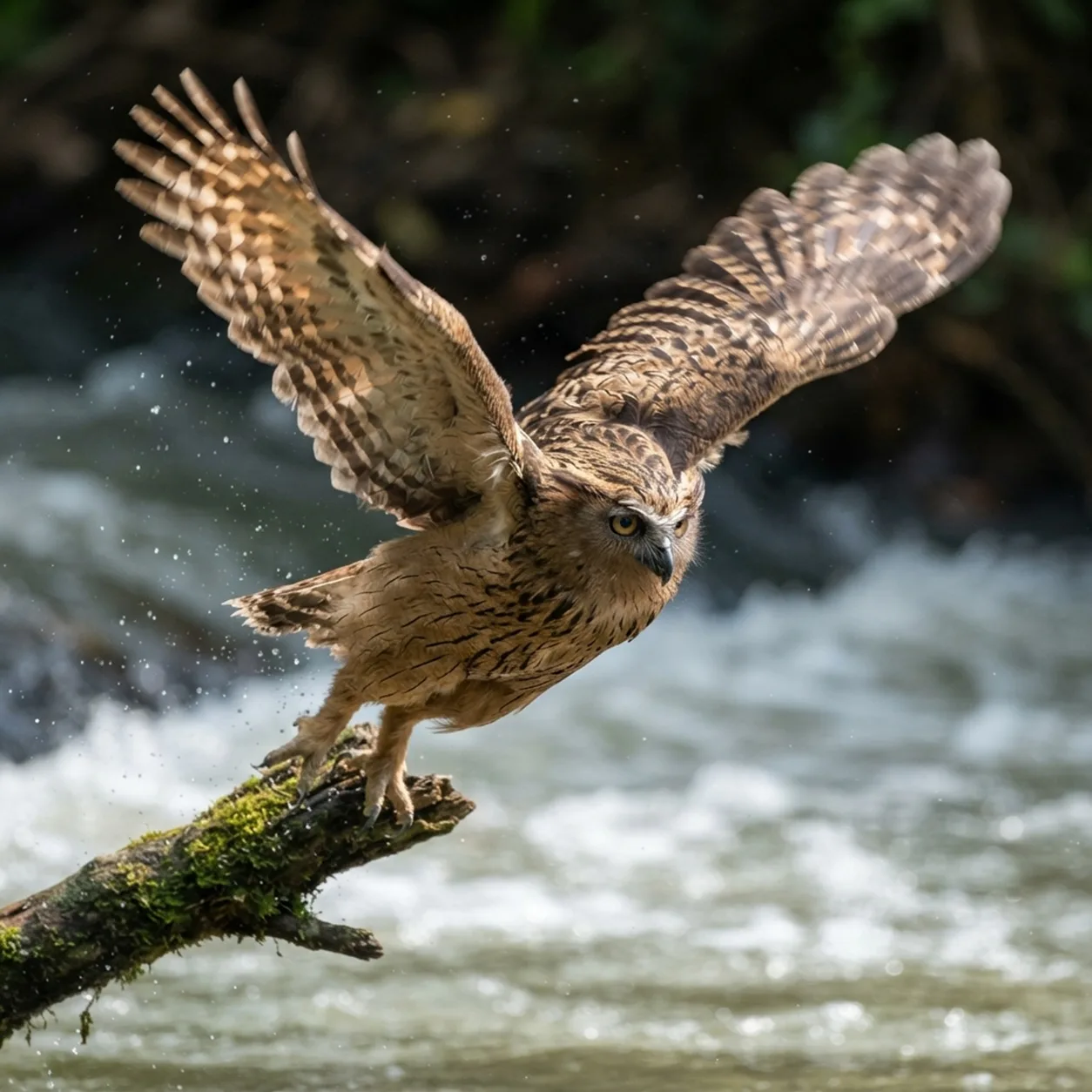
Birds of prey
A large and strong owl
The Brown fish owl (Ketupa zeylonensis) is a large, bulky resident owl in the family Strigidae that is widely distributed across South and Southeast Asia.
Key Characteristics
Size & Length: 48 to 61 cm (19 to 24 in)
Wingspan: 125 to 140 cm (49 to 55 in)
Weight: 1.1 to 2.5 kg (2.4 to 5.5 lb)
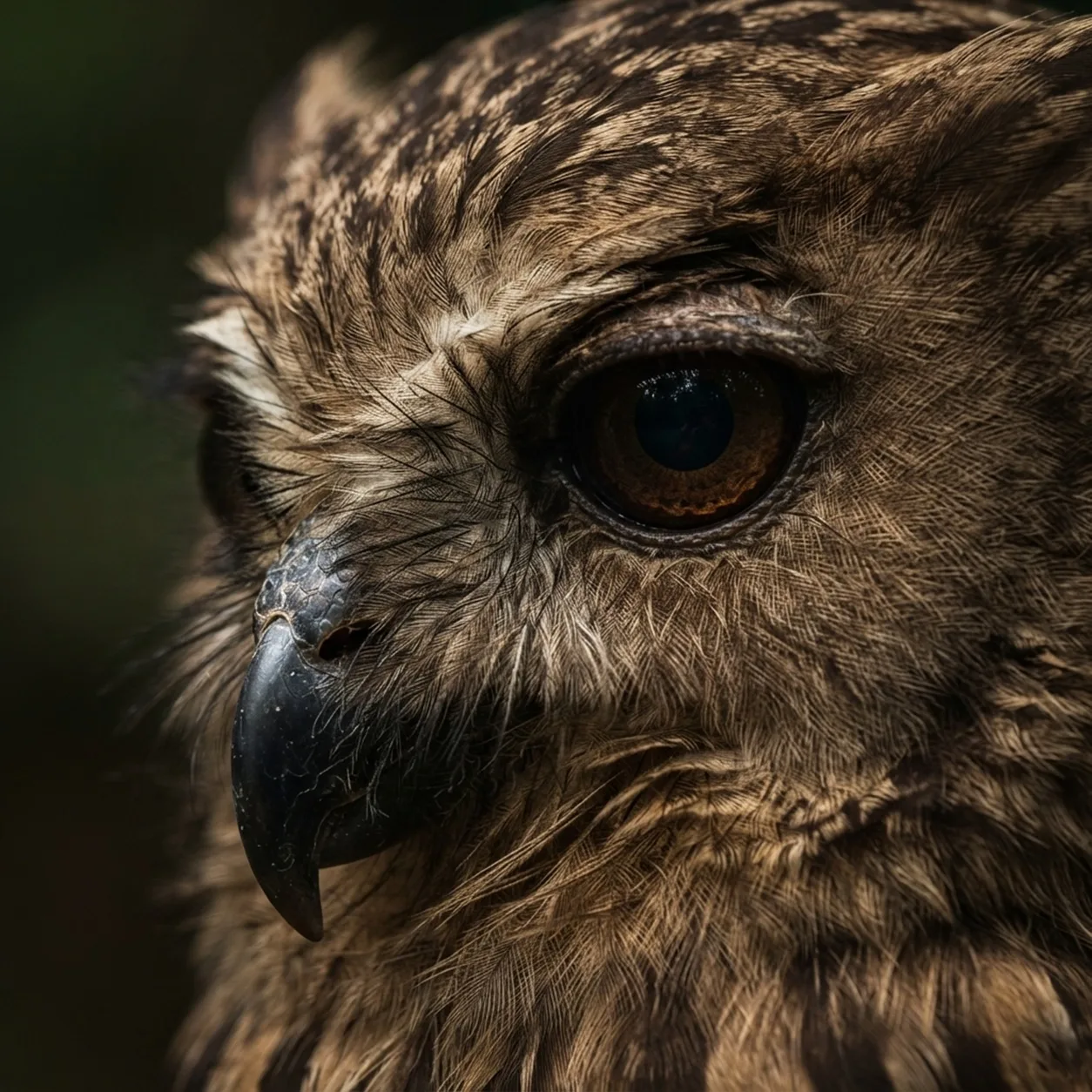
Eye Color: Striking bright yellow
Conservation Status: Least Concern (IUCN Red List)
Physical Appearance and Adaptations
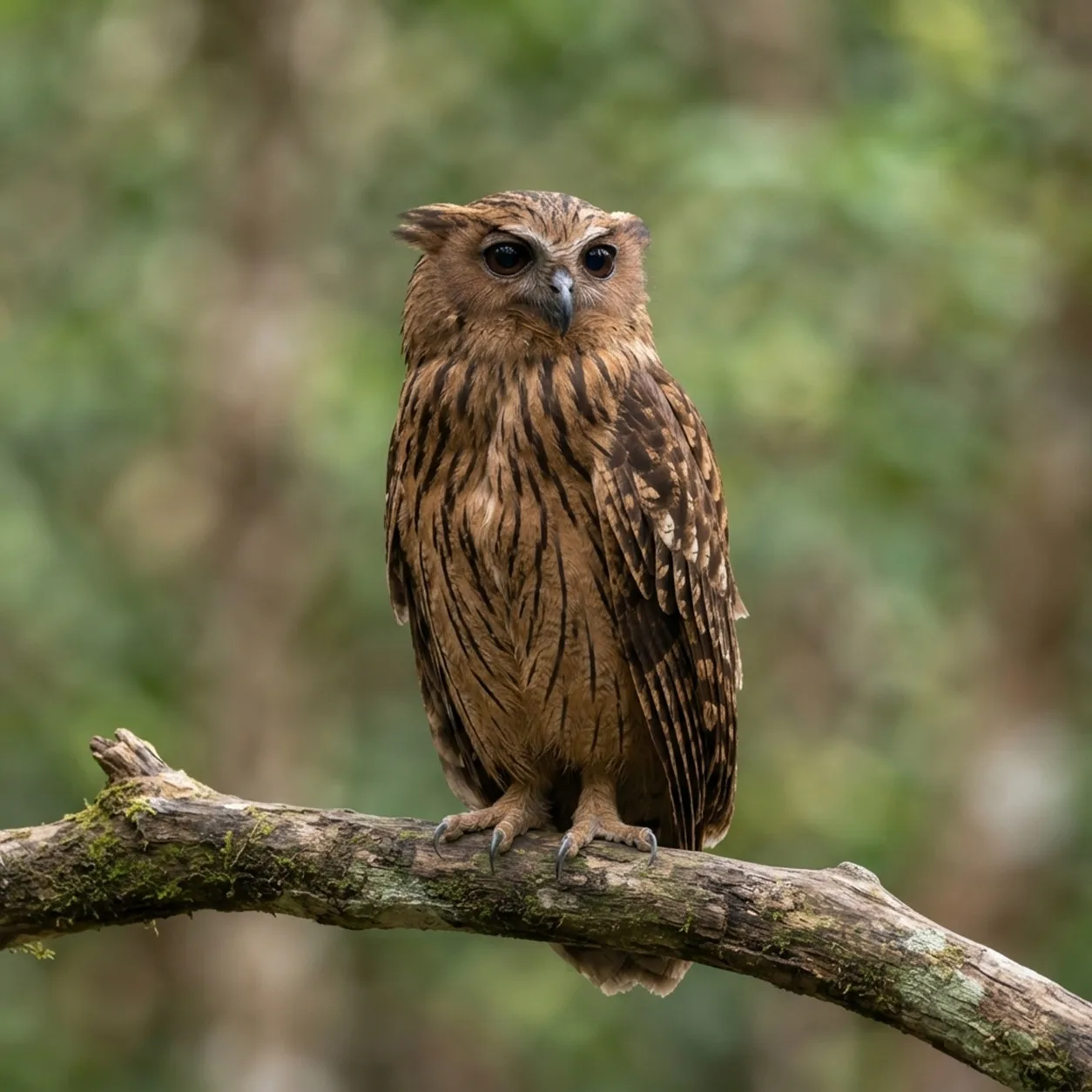
- Plumage: Reddish-brown upperparts heavily streaked with black or dark brown, alongside buffy-fulvous underparts with wavy dark brown streaks.
- Facial Features: Features a plain, indistinct facial disk, a dirty white puffed "bib" or throat patch, and heavy brows that create a moody or stern expression.
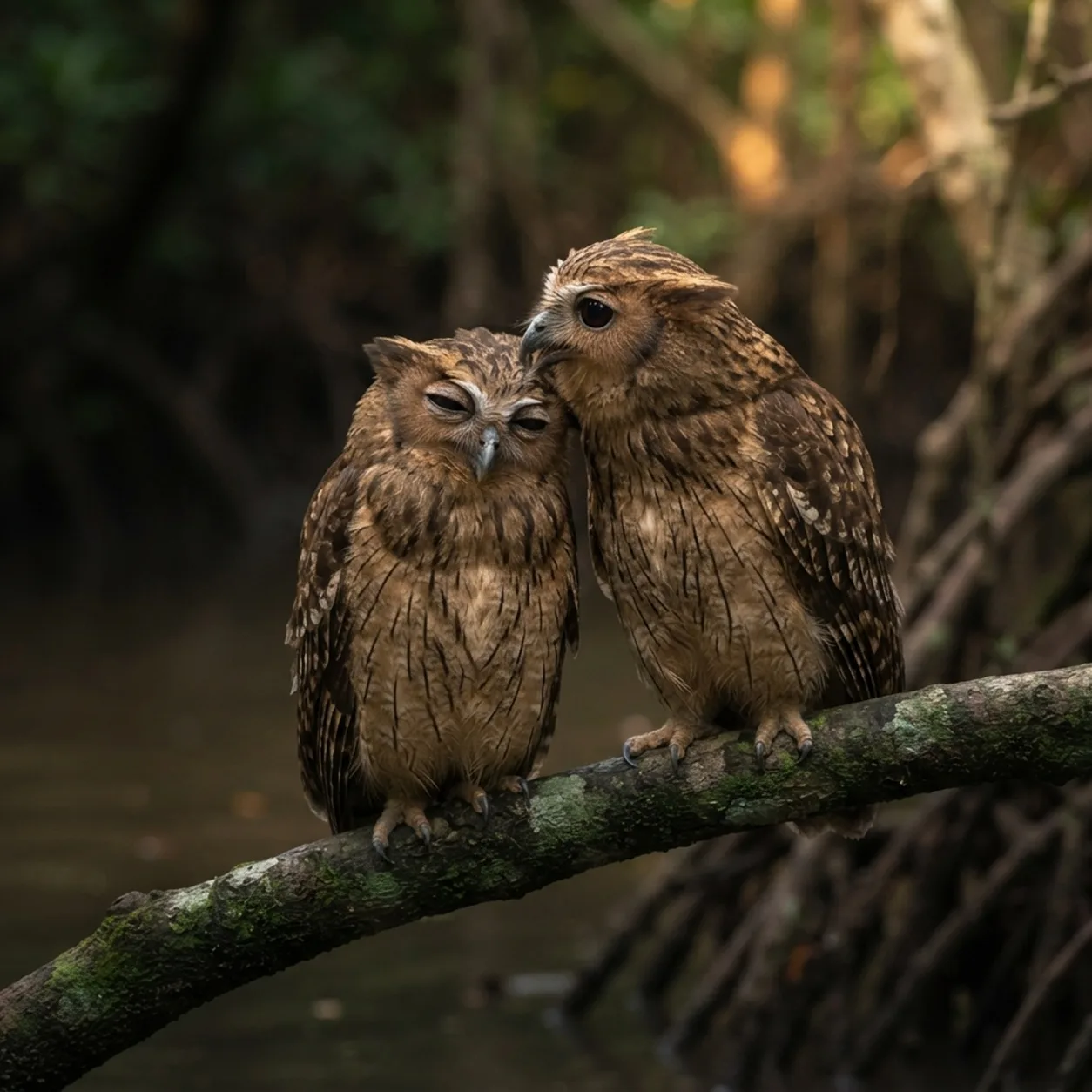
- Ear Tufts: Prominent, tousled, and horizontally drooping ear-tufts that look like mammalian ears.
- Specialized Feet: Unfeathered, yellow legs and feet with a rough texture on the bottom of the toes and sharp, curved talons to securely grasp slippery aquatic prey.
- Noisy Flight: Unlike most typical owls, their feathers lack the soft fringes and combs needed for silent flight, making their wingbeats somewhat audible.
Habitat and Range
- Geographic Distribution: Found from Turkey through the Middle East, the Indian subcontinent, Myanmar, Thailand, and parts of Southeast Asia and southern China.
- Preferred Environment: Strongly tied to water bodies, including lowland forests, rivers, streams, lakes, reservoirs, rice fields, and wooded wetlands.
Diet and Behavior
- Feeding Habits: Primarily a piscivore (fish-eater) that hunts by scanning from a low perch, skimming the water surface, or wading in shallow water.
- Prey Selection: Relies heavily on freshwater fish, frogs, and aquatic crabs (such as Potamon and Barytelphusa), occasionally taking small mammals, reptiles, and birds.
- Activity Patterns: Primarily nocturnal and crepuscular, but frequently observed active during overcast or daytime hours
- Group
- Birds of prey