

Great Hornbill
Buceros bicornis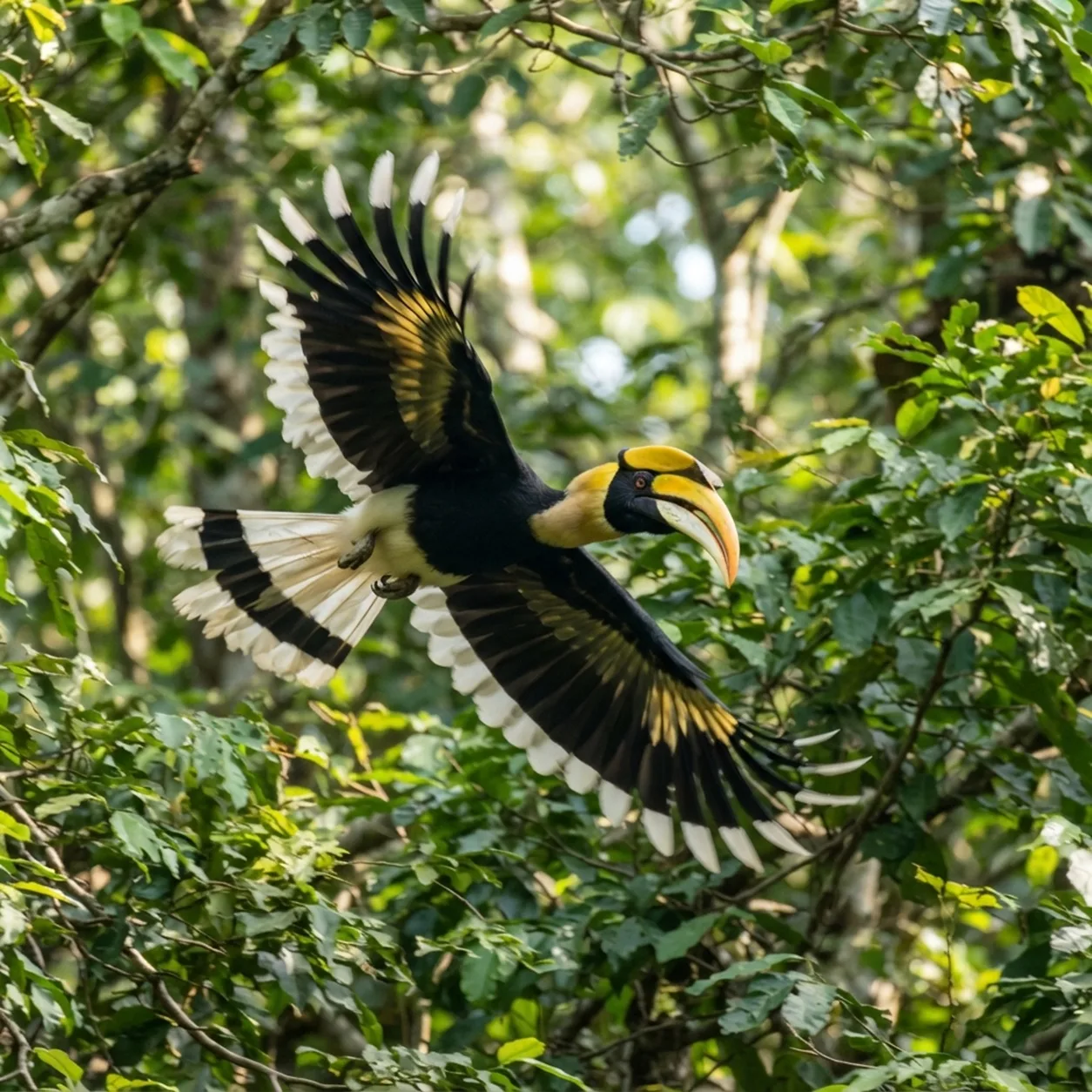
In a showHornbills
One of the largest and most interesting bird species in Asia
The great hornbill (Buceros bicornis) is one of the largest and most striking Asian hornbill species, easily recognized by its massive size, prominent yellow-and-black casque, and loud, booming calls. Found across the Indian subcontinent and Southeast Asia, this majestic canopy dweller plays a critical role in maintaining tropical forest ecosystems.
Physical Characteristics
- Size and Weight: Grows to 95–130 cm (37–51 in) long with an impressive 152 cm (60 in) wingspan. Males weigh roughly 3 kg (6.6 lb), while females average 2.59 kg (5.7 lb).
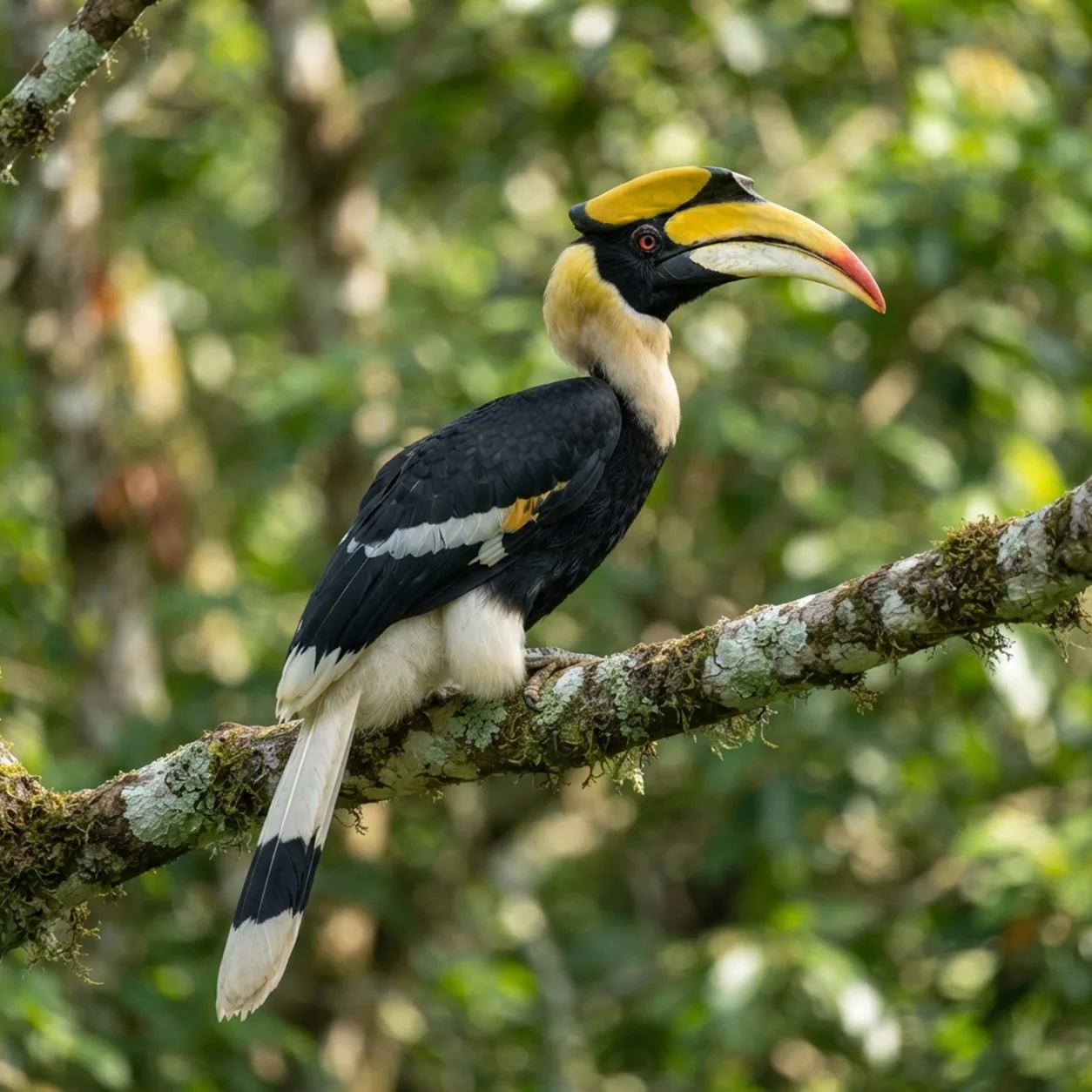
- Plumage: Features a contrasting black face, wings, and breast paired with a white neck, belly, and tail marked with a distinct black band. Feathers are often naturally stained yellow by preen oil.
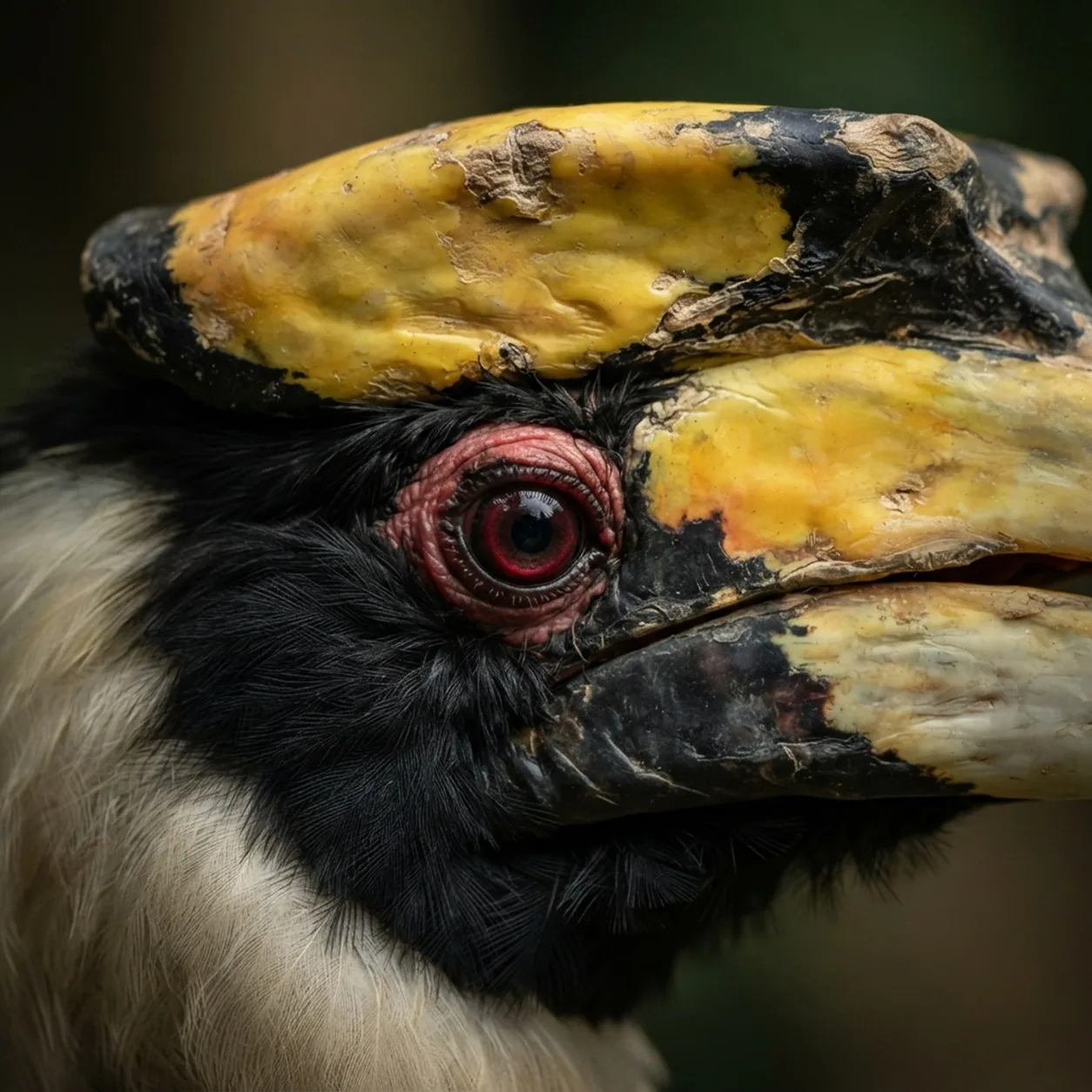
- The Casque: Bears a bright yellow-and-black U-shaped casque on top of its massive bill, which is concave on top with two ridged points forming a "two-horned" appearance (bicornis).
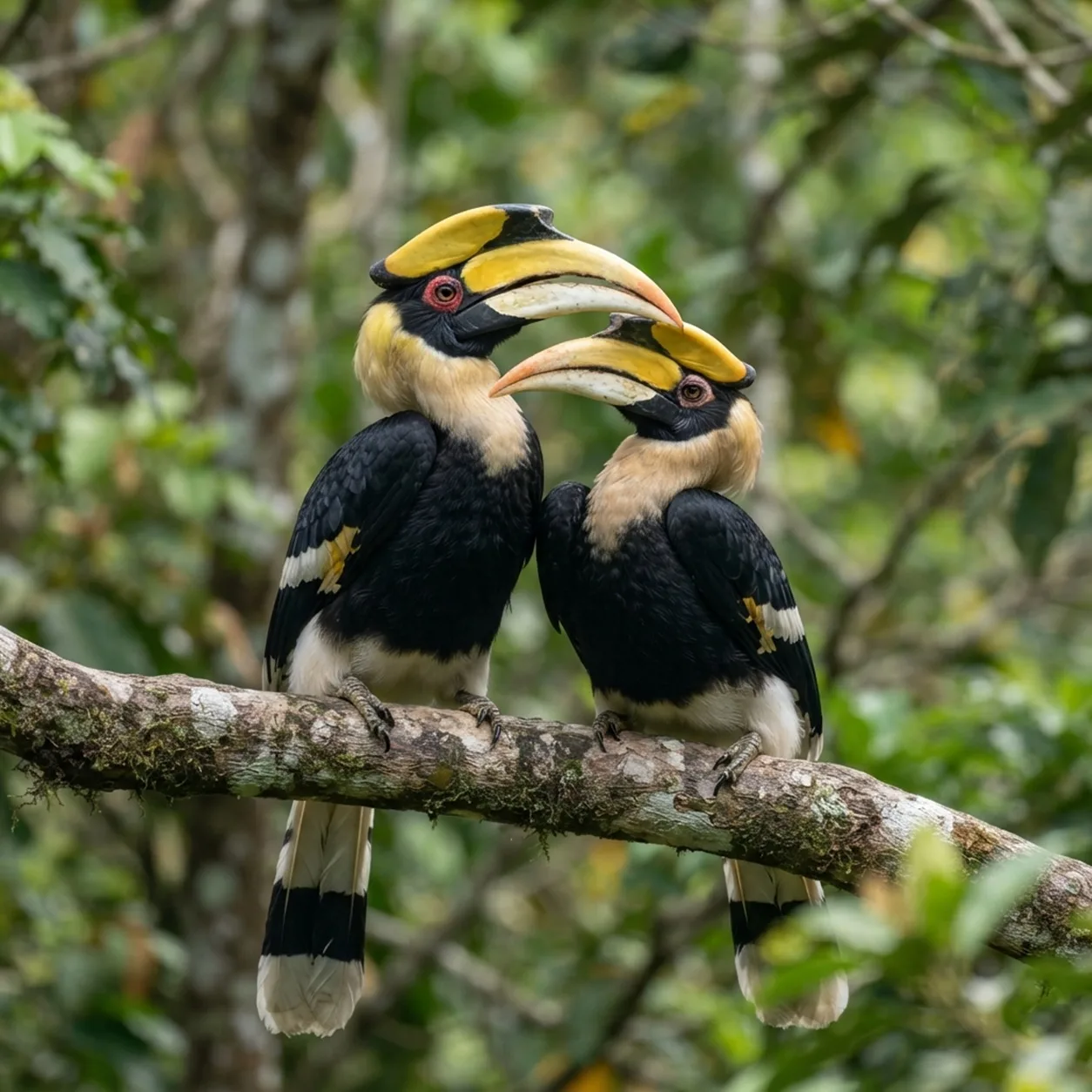
- Sexual Dimorphism: Males possess red eyes with black rims and black lines on the front underside of the casque, while females have bluish-white eyes and a reddish rear casque without black markings.
Habitat and Distribution
- Geographic Range: Inhabits moist, dense, unlogged primary evergreen and mixed deciduous forests across India, Southeast Asia, and parts of China and Indonesia.
- Elevation: Reaches elevations up to 1,560 meters in southern India and up to 2,000 meters in Thailand.
- Social Behavior: Usually observed in pairs or small social groups of 2 to 40 birds, though larger aggregations gather around heavy fruiting trees.
Diet and Ecological Role
- Frugivorous Diet: Feeds primarily on fruit, with figs making up the absolute core of their daily intake. They also consume lipid-rich fruits from the Lauraceae and Myristicaceae families.
- Carnivorous Supplement: Acts as an opportunistic omnivore, occasionally eating small mammals, birds, reptiles, insects, and bird eggs.
- Farmers of the Forest: Serves as a vital seed disperser, swallowing seeds whole and excreting them intact across wide home ranges to help regenerate rainforest tree species.
Reproduction and Nesting
- Breeding Season: Begins nesting between December and May depending on the regional latitude.
- Natural Sealing: Pairs nest in deep cavities of tall, old-growth trees. The female seals herself inside using a mixture of mud, droppings, and fruit pulp, leaving only a tiny vertical slit.
- Male Provisioning: The female stays confined inside to incubate 1 to 2 eggs and raise chicks, relying completely on the male to pass food through the slit for roughly four months.
Conservation Status
- Vulnerable Status: Listed as Vulnerable on the IUCN Red List due to rapid population declines.
- Primary Threats: Threatened by widespread deforestation, loss of large nesting trees, and illegal hunting for meat, feathers, and their distinct casques.
- Group
- Hornbills