
Lesser Adjutant Stork
Leptoptilos javanicus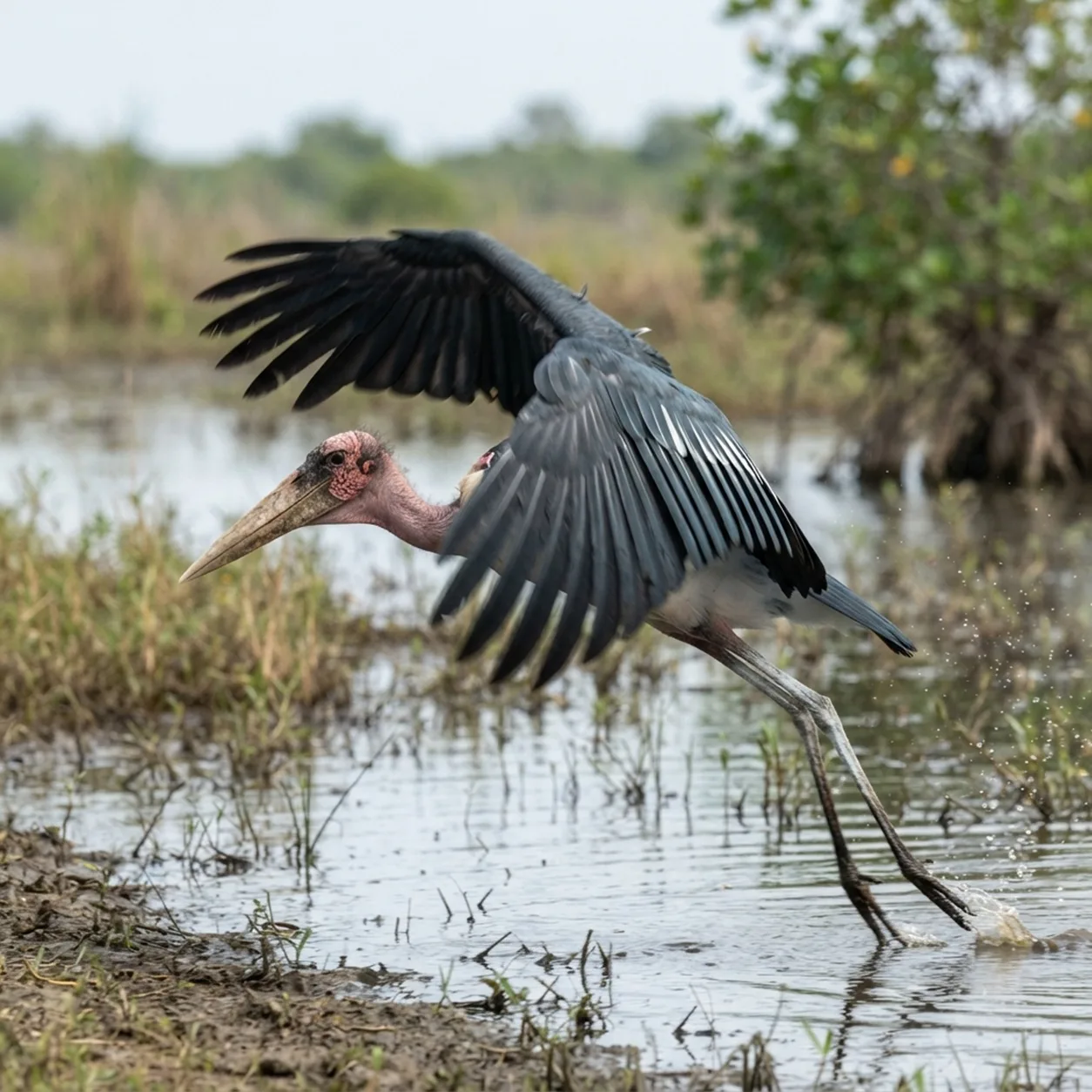
Storks & cranes
A large water bird belonging to the stork family (Ciconiidae).
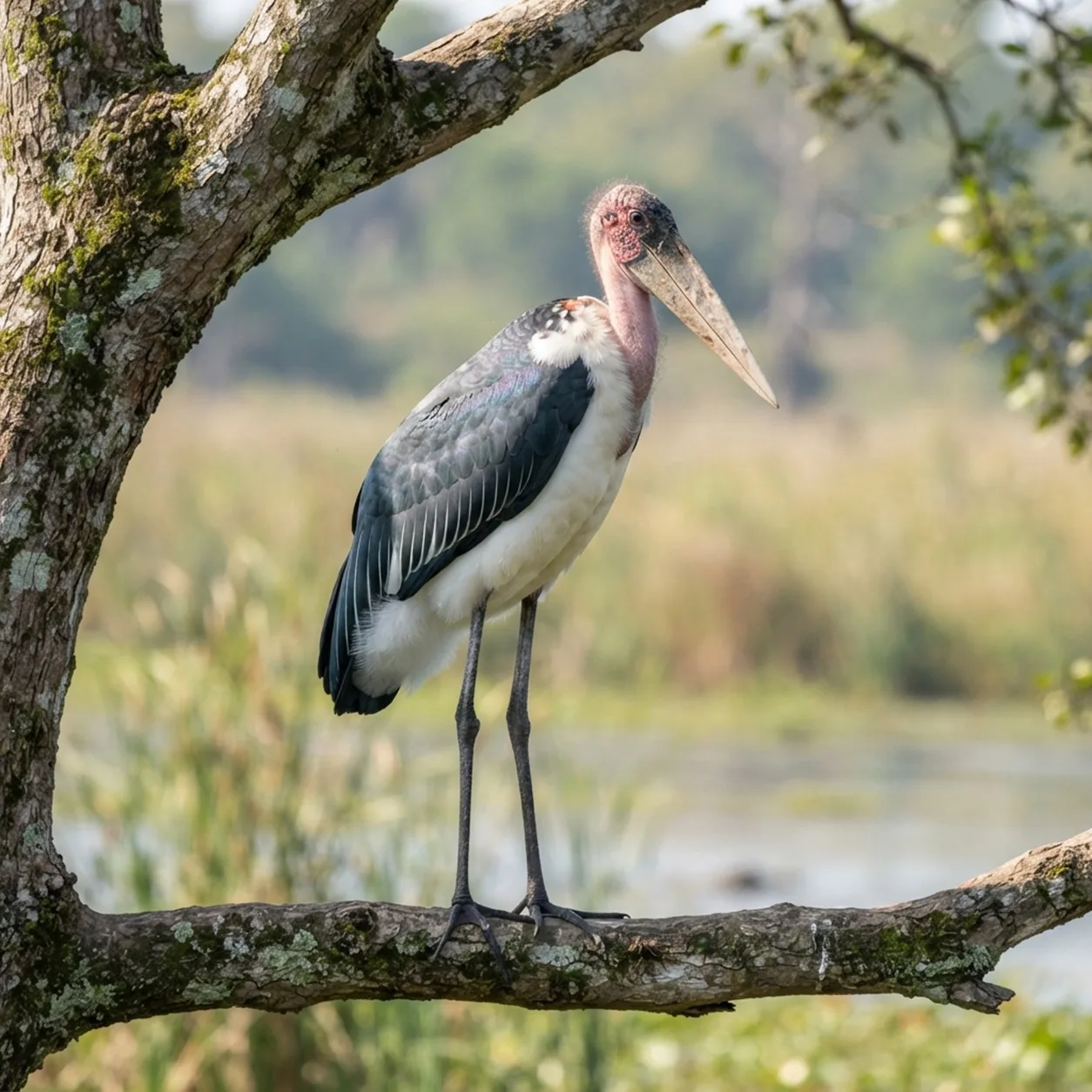
The lesser adjutant stork (Leptoptilos javanicus) is a large wading bird belonging to the stork family Ciconiidae, standing roughly 110 to 120 cm tall with a massive wingspan of up to 210 cm.
Key Physical Characteristics
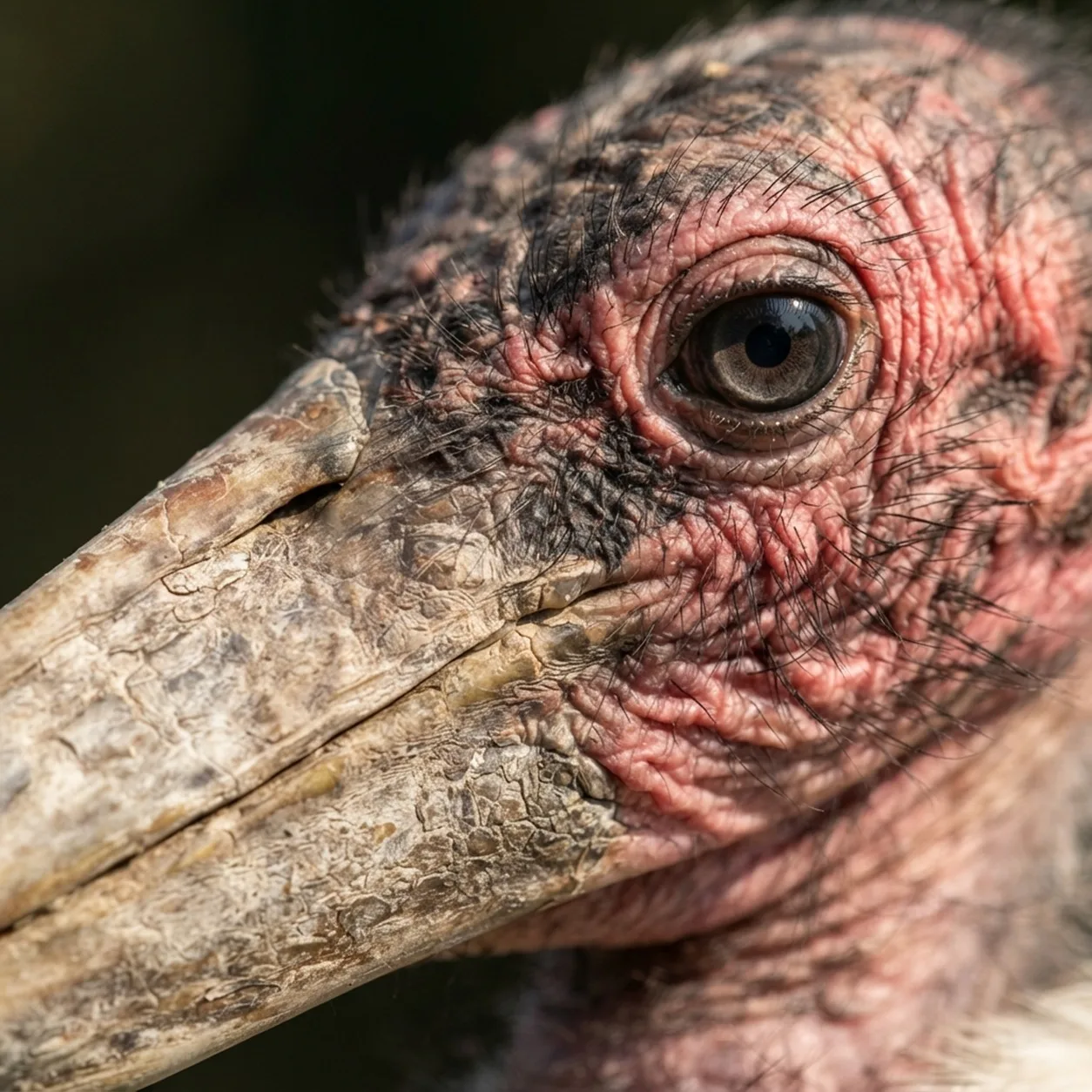
- Head and Neck: Completely bald with wrinkled skin, showing a reddish face and yellow or orange neck during the breeding season, adorned with sparse hair-like feathers.
- Bill: Large, long, straight, and pale horn-colored, appearing more slender than that of its relative, the greater adjutant.
- Plumage: Glossy black upperparts and wings with white underparts, displaying distinct white patches on the inner underwing during flight.
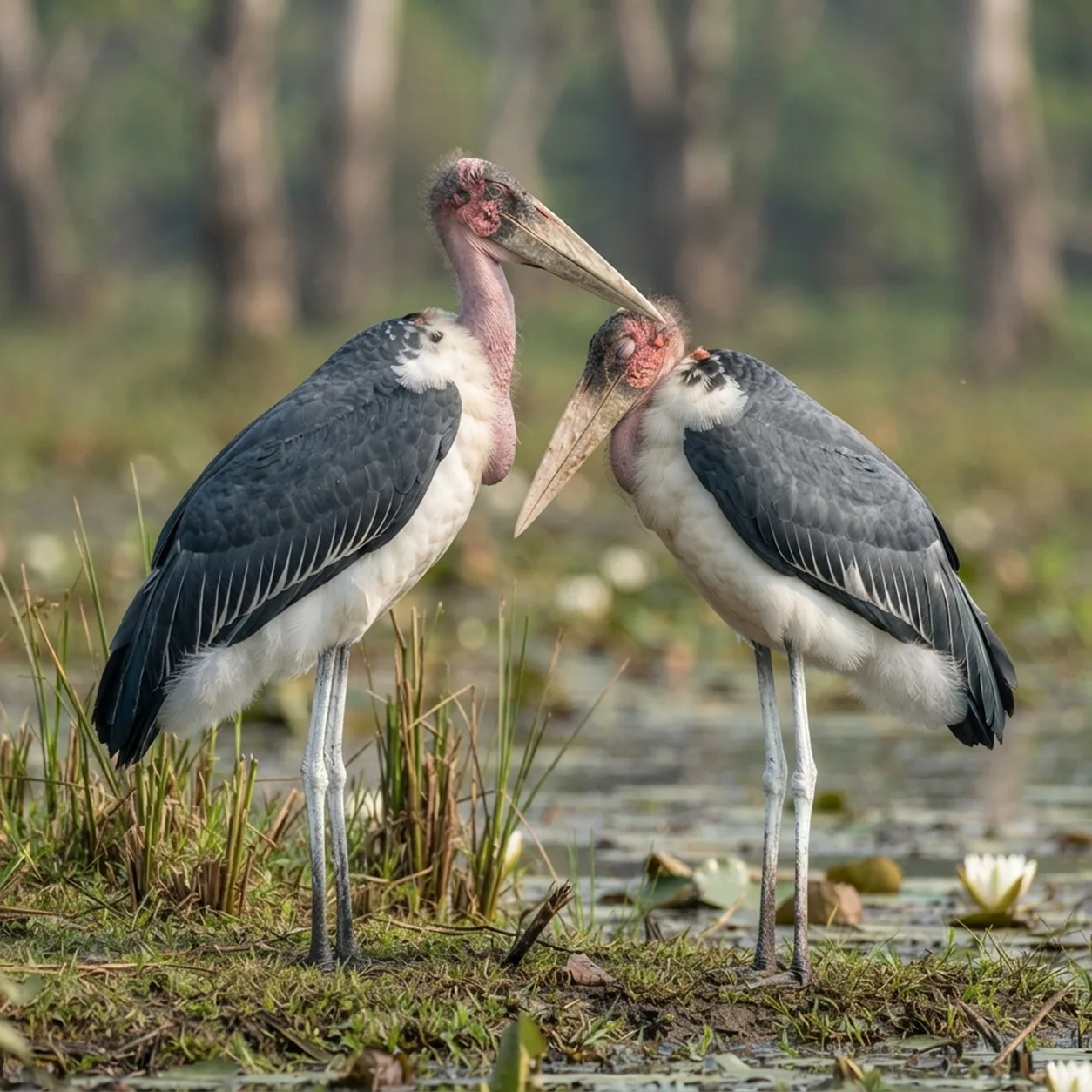
- Posture: Adopts a tall, upright, and stoic stance rather than the hunched look of other storks.
Habitat and Distribution
- Range: Found natively across South and Southeast Asia, spanning from India and Nepal through Myanmar, Thailand, Malaysia, and into parts of Indonesia like Java.
- Environment: Inhabits freshwater wetlands, flooded grasslands, swamps, paddy fields, and coastal mangroves or mudflats.
- Behavior: Typically solitary or found in loose pairs, preferring quiet, undisturbed areas and nesting on large stick platforms high up in isolated mature trees.
Diet and Conservation Status
- Diet: Forages in shallow water and mud for fish, frogs, reptiles, large aquatic invertebrates, and occasional carrion, though it relies less on scavenging than the greater adjutant.
- Conservation Status: Listed as Vulnerable on the IUCN Red List due to ongoing threats from wetland degradation, agricultural expansion, hunting, and the loss of tall nesting trees.
- Group
- Storks & cranes