
Orangutan
Pongo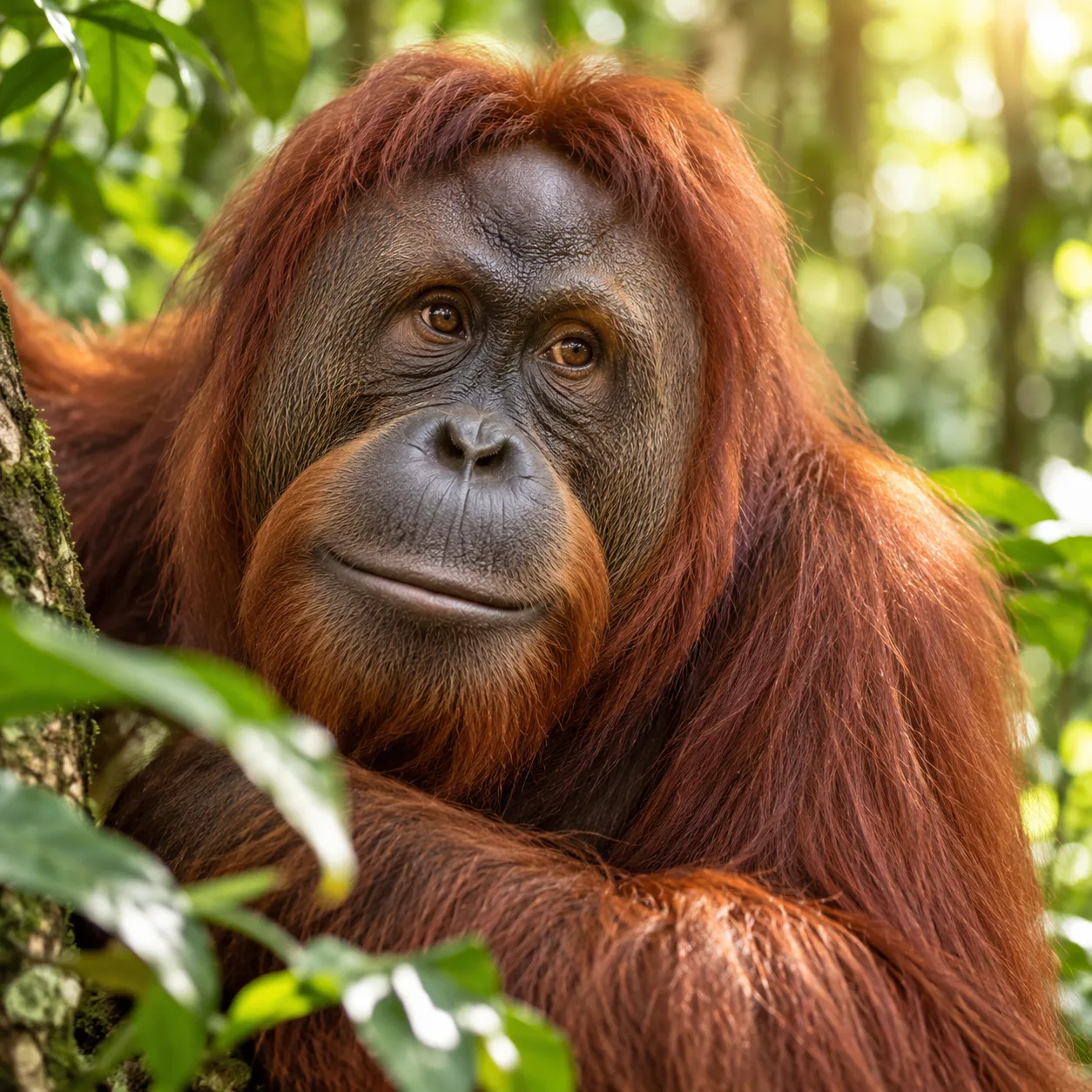
Intelligent great ape with long arms and distinctive reddish fur.
Orangutans are the only great apes native to Asia. Their name originates from the Malay words "orang hutan," which translates to "person of the forest". Inhabiting the lush, tropical rainforests of Borneo and Sumatra, these brilliant, red-haired primates share roughly 97% of their DNA with humans, making them some of our closest biological relatives.
The Three Distinct Species
There are three recognized species of orangutans, all of which are classified as Critically Endangered:
- Bornean Orangutan (Pongo pygmaeus): Found across the island of Borneo, they tend to have slightly darker, coarser maroon hair and a thicker body build.
- Sumatran Orangutan (Pongo abelii): Native to Sumatra, they sport lighter, longer, and silkier orange coats. They are highly arboreal due to ground predators like tigers.
- Tapanuli Orangutan (Pongo tapanuliensis): Discovered as a distinct species in 2017, this incredibly rare population lives exclusively in the Batang Toru forest of Sumatra. With fewer than 800 individuals left, it is the most endangered great ape on Earth
Physical Traits & Lifestyle
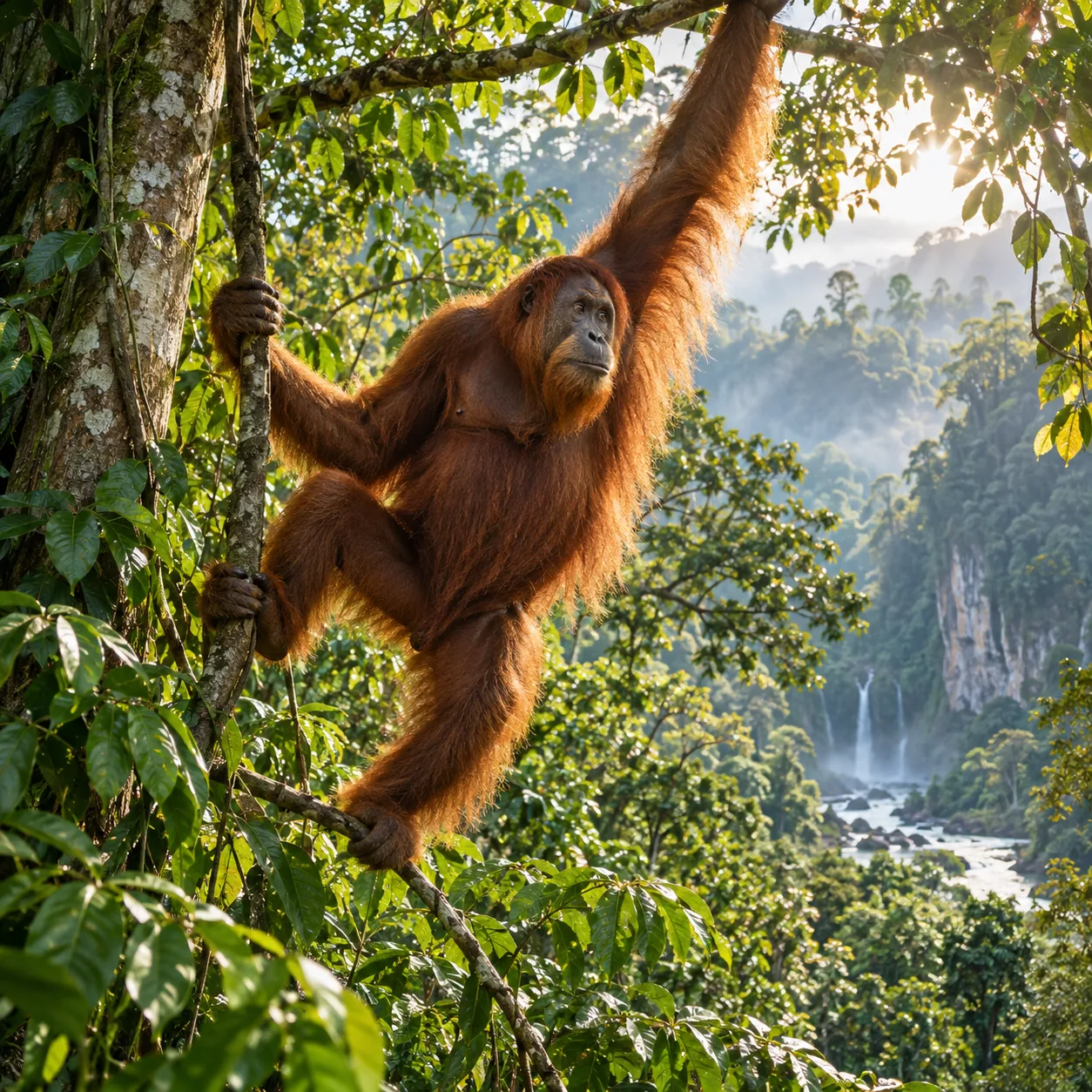
- Masters of the Canopy: As the largest arboreal mammals in the world, orangutans spend about 90% of their lives high up in the trees. They even weave intricate leafy nests in the branches to sleep safely every single night.
- Exceptional Reach: They display profound sexual dimorphism; mature males can weigh up to 200 pounds or more and boast a colossal arm span of up to 7 feet (2 meters)—a reach significantly wider than their standing height.
- Solitary Minds: Unlike highly social chimpanzees or gorillas, adult orangutans are mostly solitary loners. Males use booming, resonant "long calls" that travel miles through the jungle to map out territories and ward off rivals.
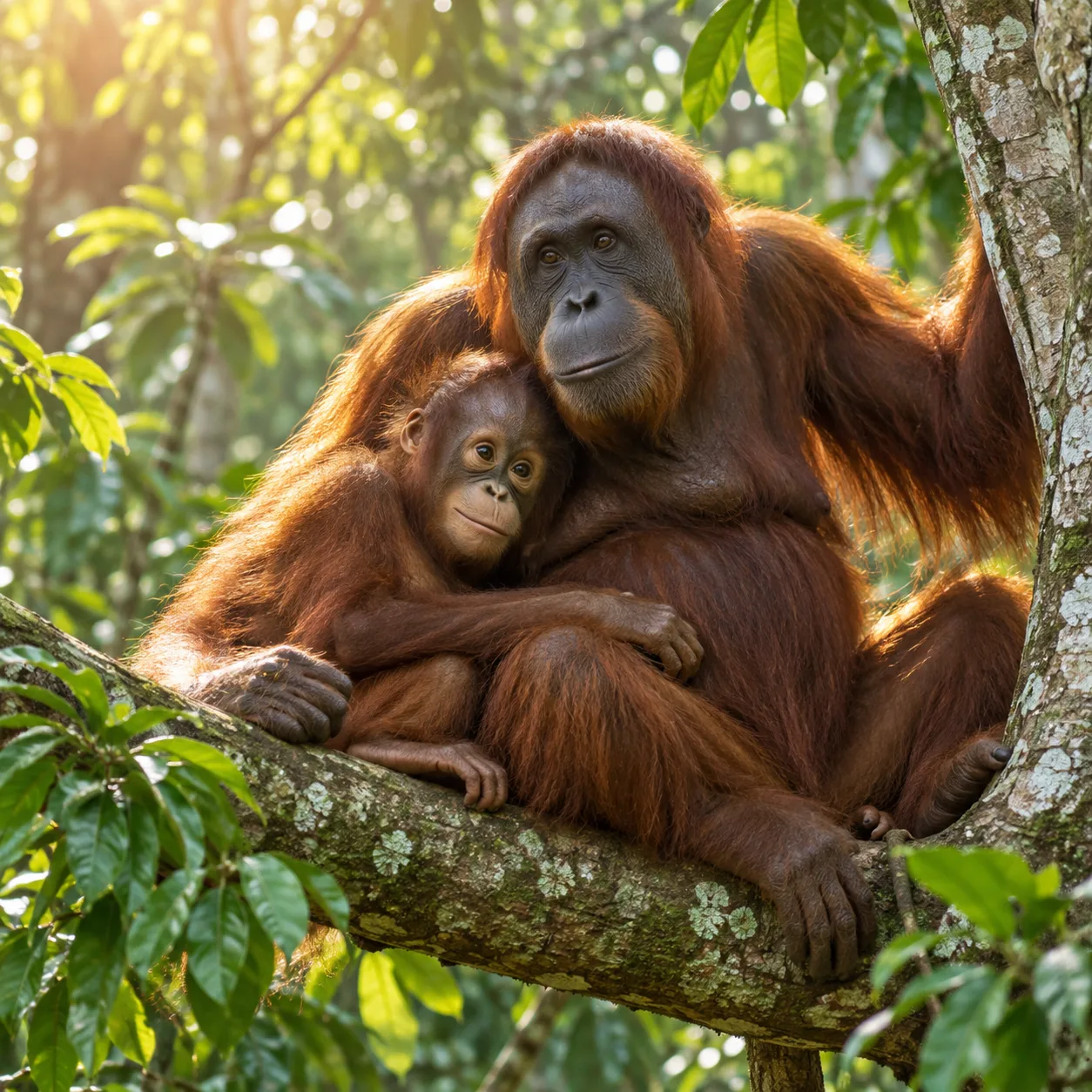
- Extended Childhoods: Orangutans have the longest interbirth intervals of any land mammal, with females giving birth only once every 7 to 9 years. A baby orangutan remains intensely dependent on its mother for up to 8 years to learn vital survival skills like foraging and tool-using.
Current Threats
Wild populations are facing severe pressure from habitat destruction due to logging, wildfires, and the widespread expansion of palm oil plantations. They are also frequent targets of the illegal wildlife trade, where infants are stripped from their mothers to be sold as exotic pets. In a striking example of this global crisis, a major trafficking investigation was launched in September 2026 after five smuggled baby orangutans were intercepted thousands of miles from home in the forests of Odisha, India.
Global conservation groups like the World Wildlife Fund (WWF) and the Sumatran Orangutan Society work continuously to establish protected sanctuaries, restore degraded canopy corridors, and enforce anti-poaching initiatives
- Group
- Primates