
Oriental pied hornbill
Anthracoceros albirostris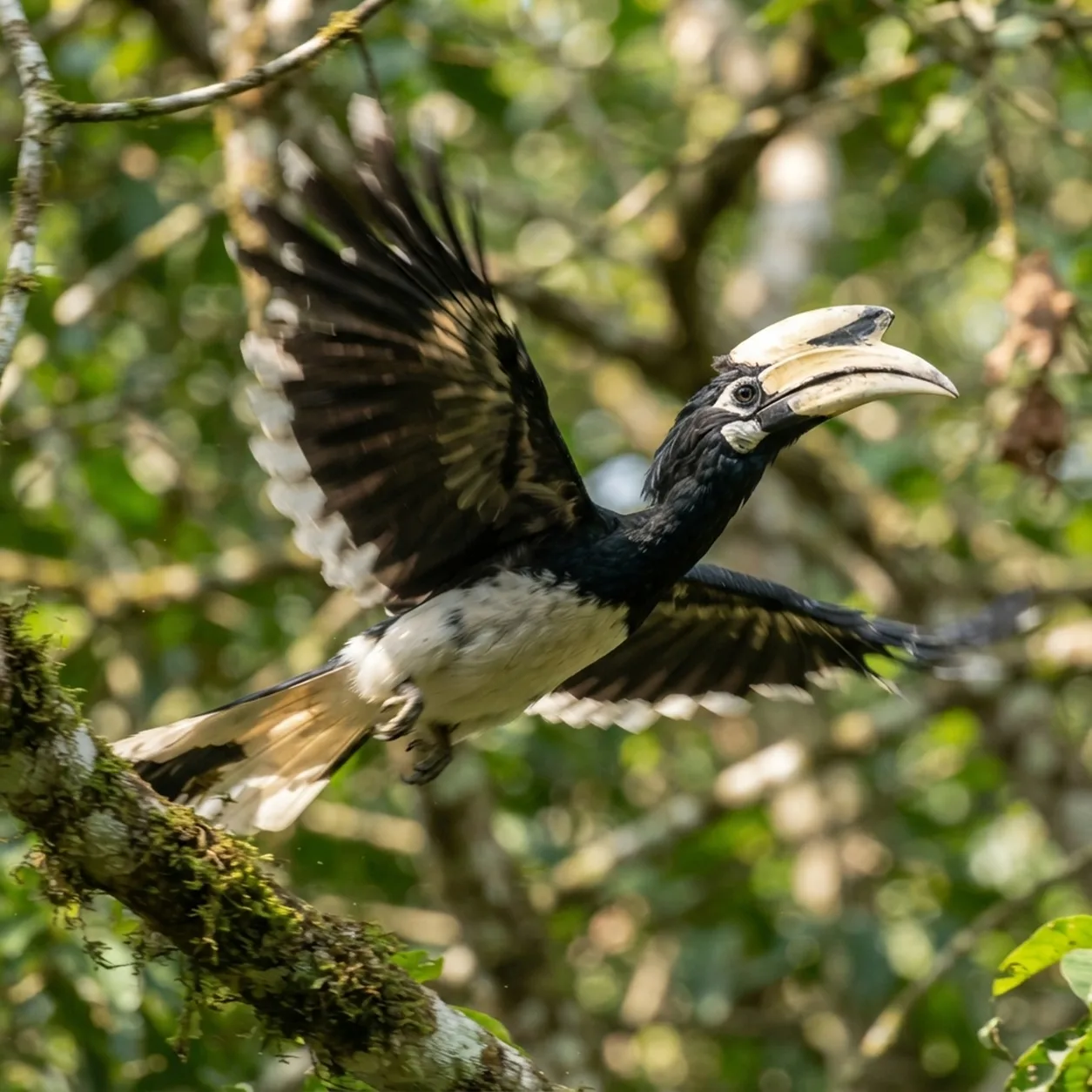
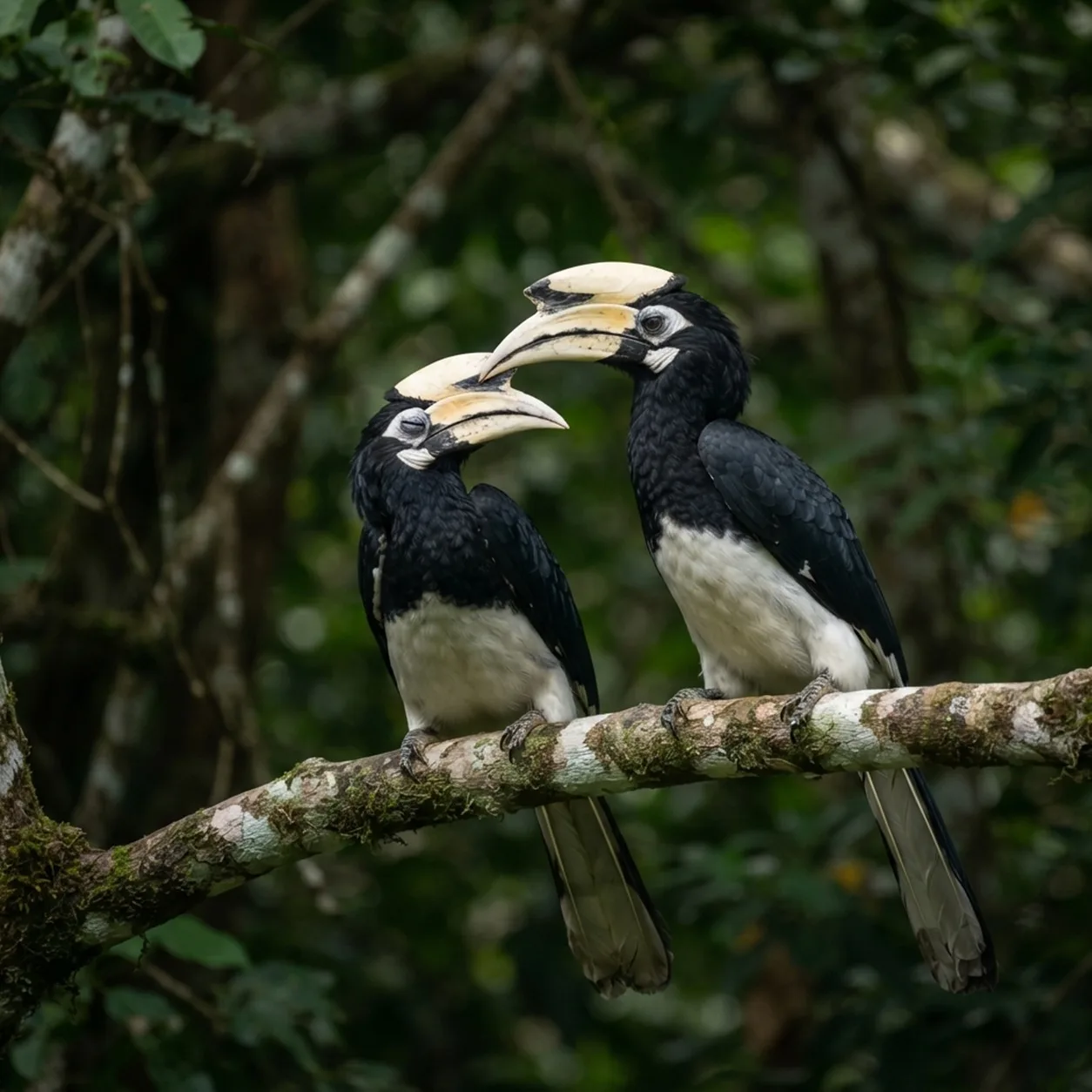
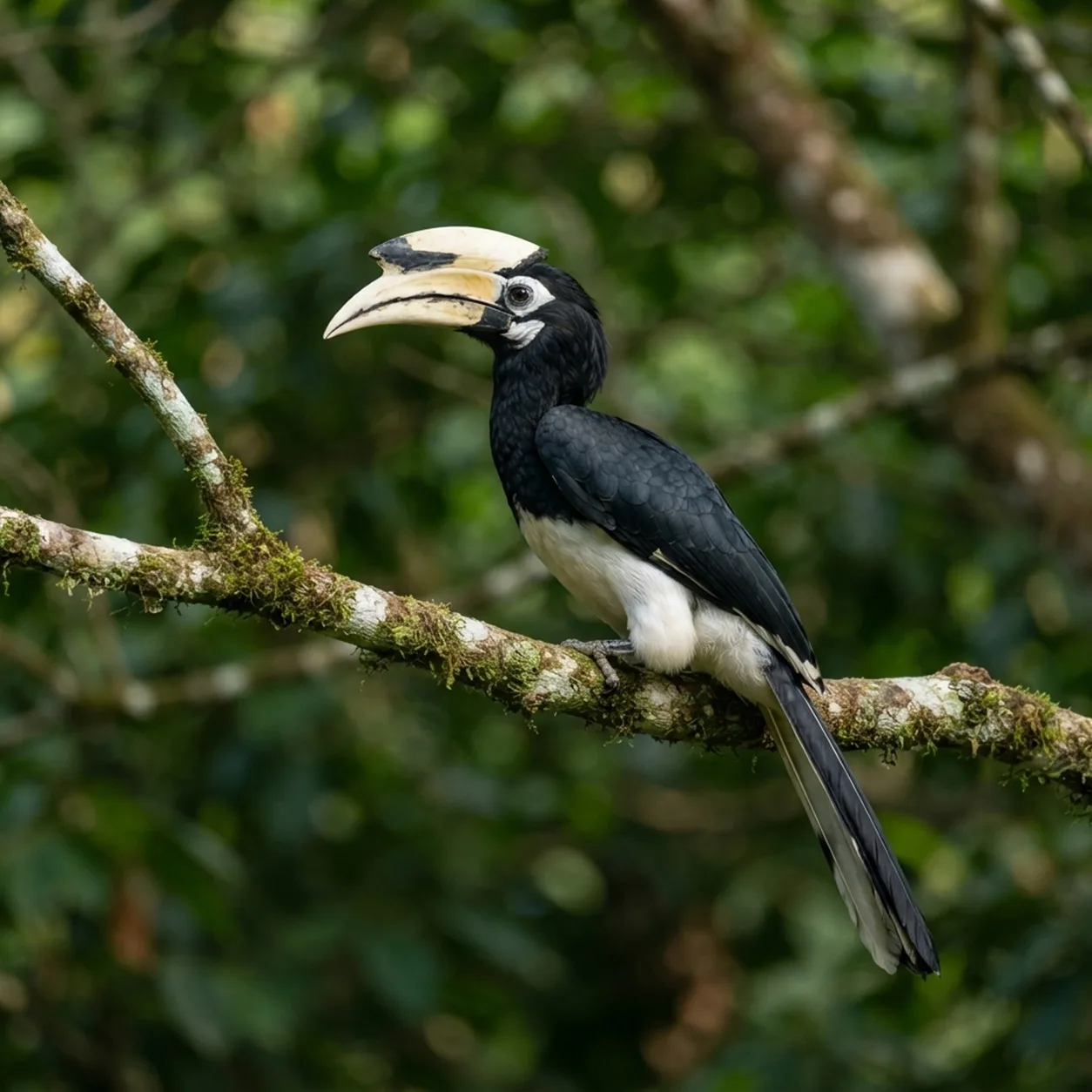
Medium-sized, crustacean birds that live on the tops of tall trees
The Oriental pied hornbill (Anthracoceros albirostris) is a medium-sized, canopy-dwelling bird belonging to the hornbill family Bucerotidae, widely distributed across the Indian subcontinent and Southeast Asia. It is recognized as one of the smallest and most adaptable of all Asian hornbills.
Physical Characteristics
- Size and Weight: Measures about 55 to 60 cm in length with a wingspan ranging from 23 to 36 cm; adults typically weigh between 600 g and 1,050 g.
- Plumage: Mostly black with a slight green gloss on the upperparts, contrasting sharply with a white belly, lower breast, and trailing edges on the wings.
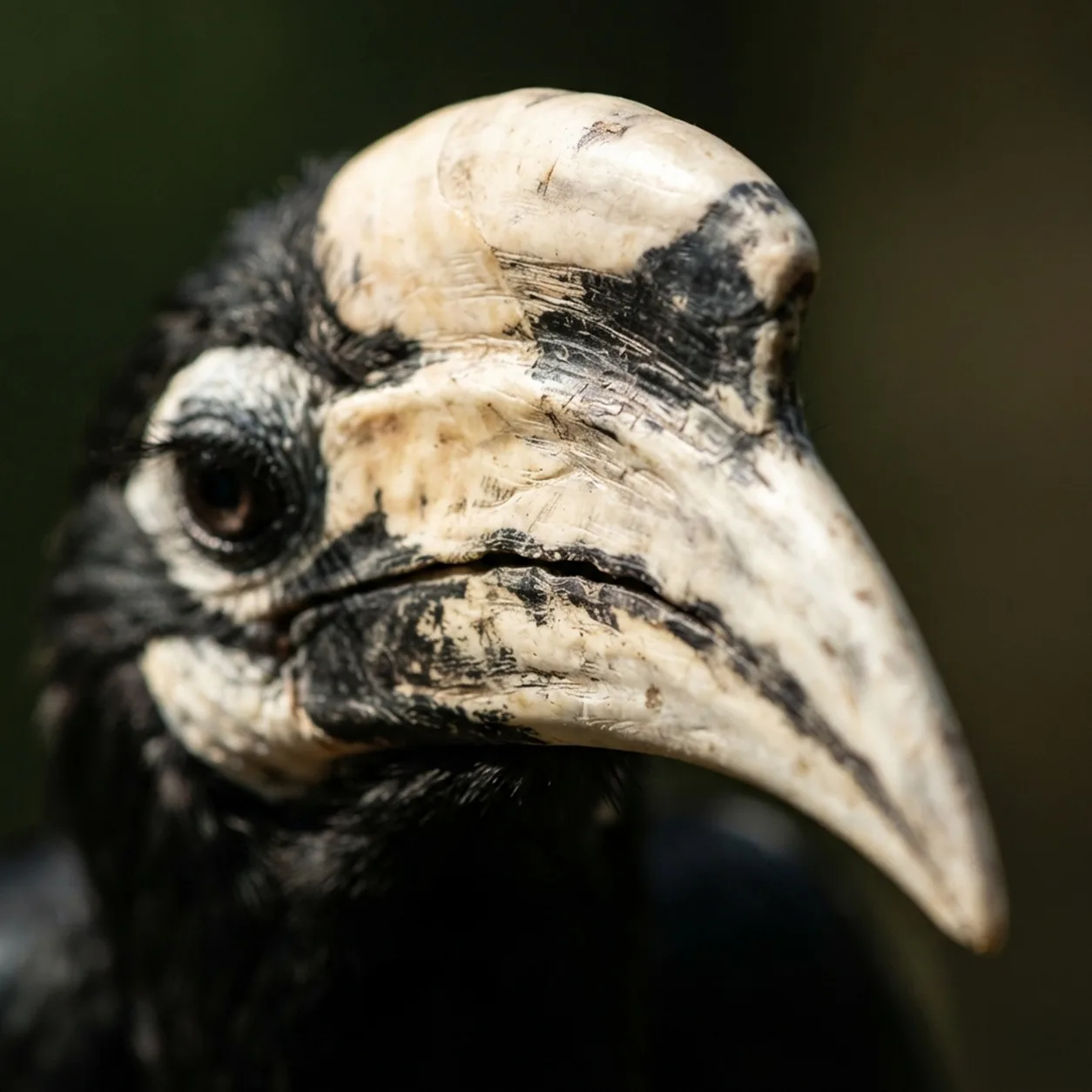
- Bill and Casque: Features a large, pale yellowish-white bill topped with a hollow, black-tipped casque. Males possess a larger casque that tapers to a sharp blade, while females feature more black marking on the bill and a smaller casque.
Habitat and Distribution
- Geographic Range: Found natively across northeastern India, Nepal, Bhutan, Bangladesh, Myanmar, Thailand, Indochina (including Cambodia, Laos, and Vietnam), Peninsular Malaysia, Singapore, and parts of Indonesia.
- Preferred Environment: Inhabits tropical and subtropical moist lowland forests, secondary growth woods, and plantations, showing a unique tolerance for human-altered landscapes and large city parks compared to other hornbill species.
Behavior and Ecology
- Diet: Primarily a frugivore that favors sugar-rich wild fruits like figs, complemented by lipid-rich items, insects, small lizards, bird eggs, and small rodents during the breeding season.
- Ecological Role: Acts as an essential "gardener of the forest" by swallowing large seeds whole and dispersing them across wide distances over the rainforest canopy.
- Nesting Habits: Exhibits unique breeding behavior where the female seals herself inside a tree cavity using a mixture of mud, droppings, and fruit pulp, leaving only a narrow slit through which the male passes food to her and the growing chicks.
Conservation Status
The species is evaluated as Least Concern by the IUCN Red List due to its massive geographic range and notable resilience to minor habitat degradation [0.2w4r4h]. Localized reintroduction and conservation efforts—such as the installation of artificial nest boxes—have also allowed urban populations, like those managed by NParks Singapore, to successfully rebound.
- Group
- Hornbills