
Banteng
Bos javanicus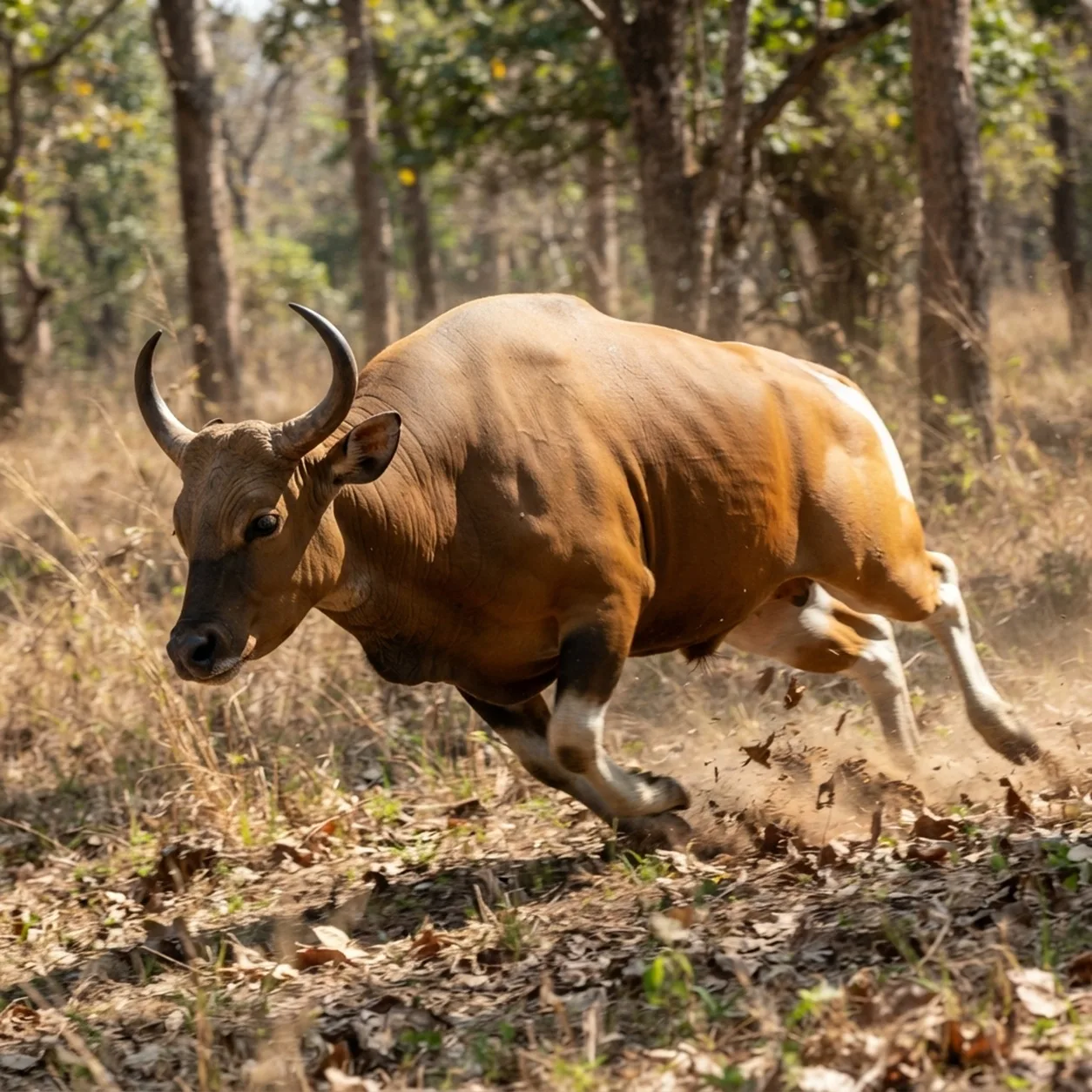
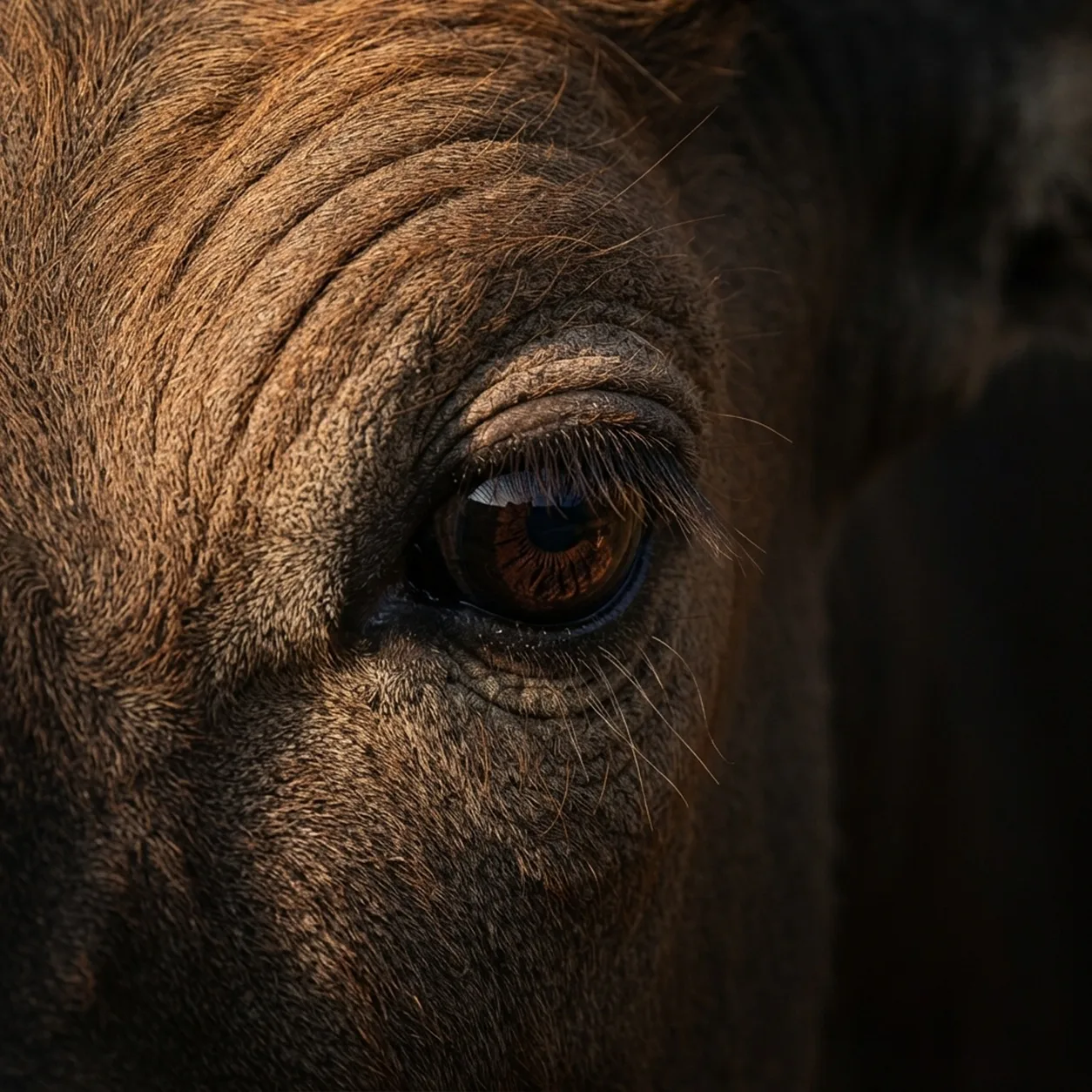
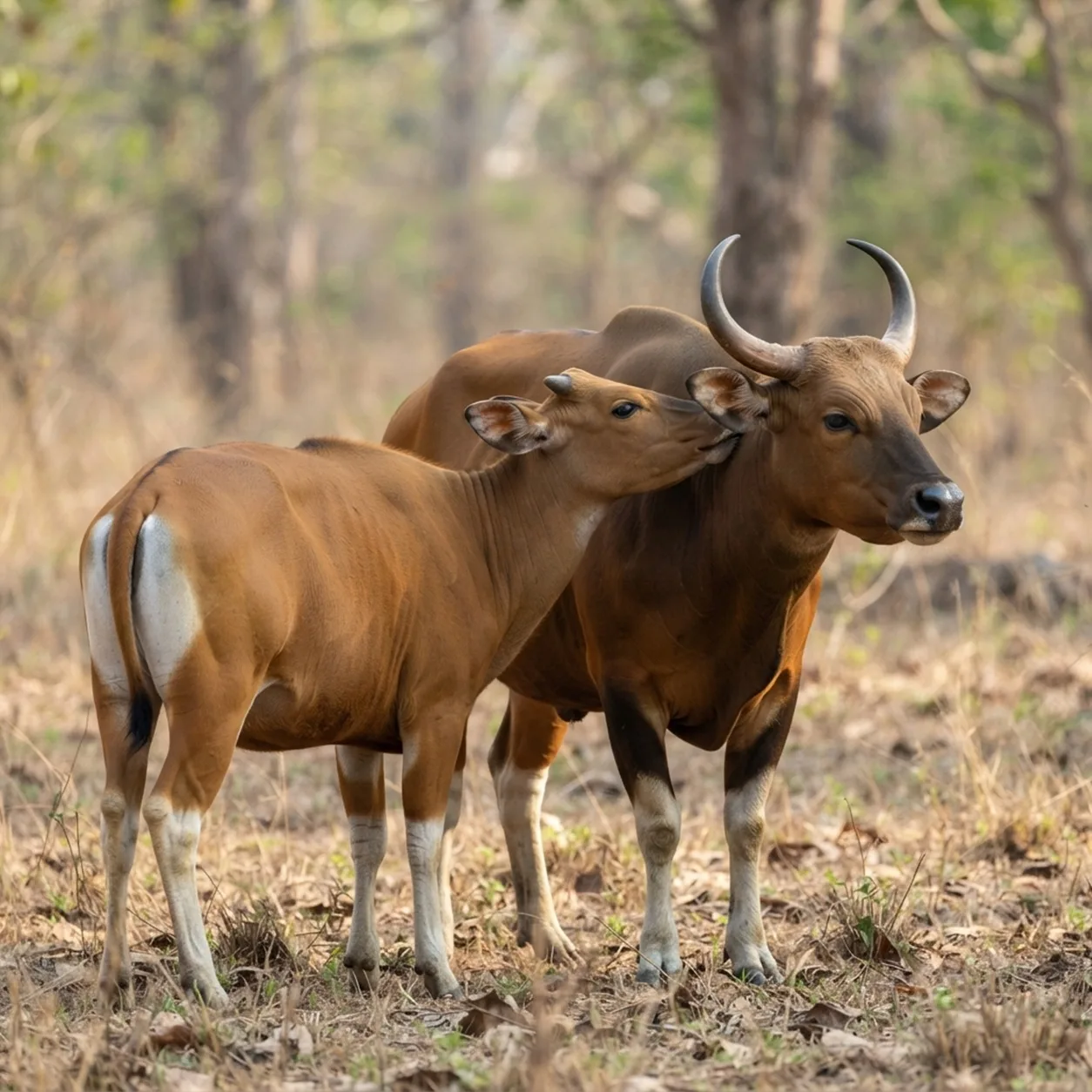
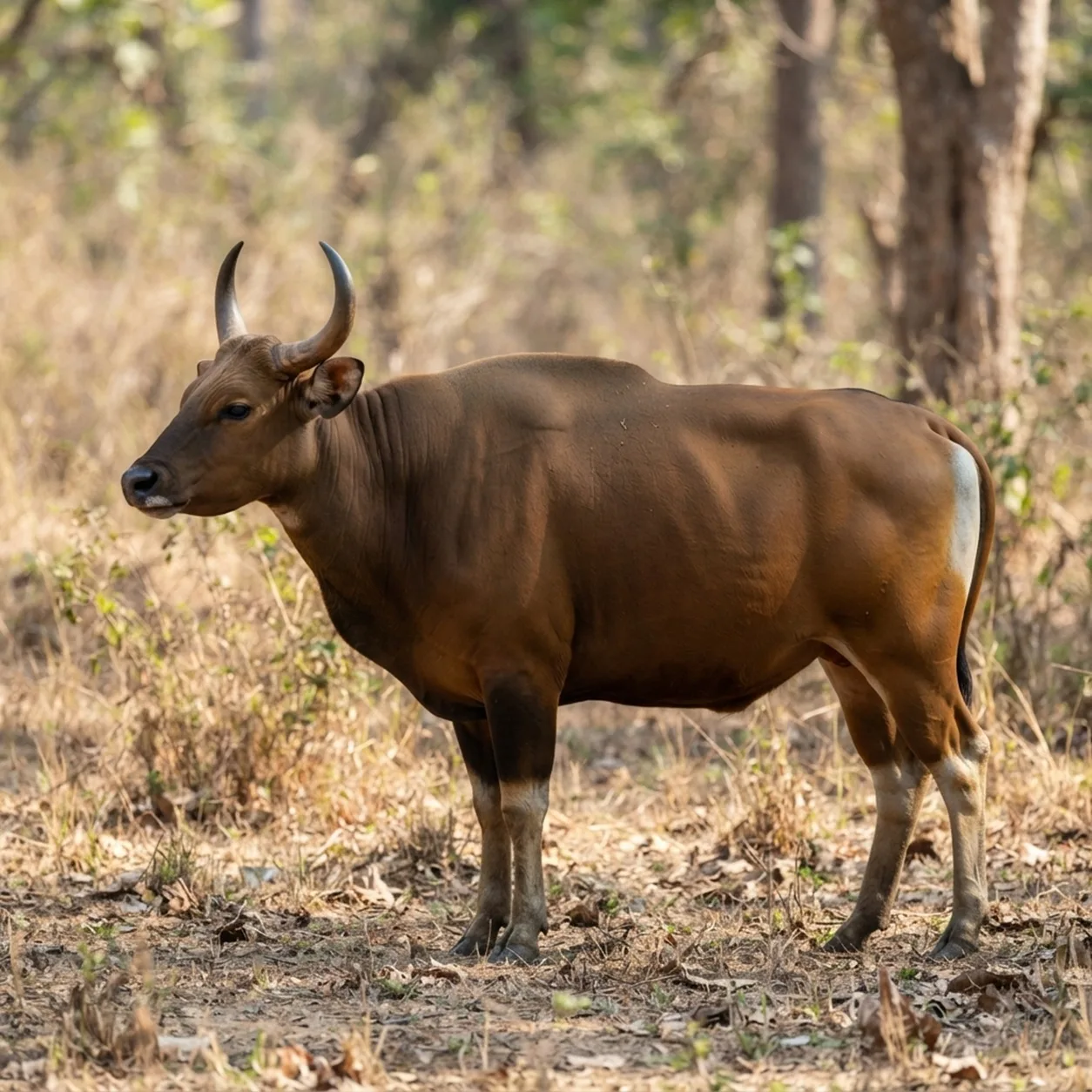
Smooth hair on the buttocks and all four legs, white from the knees down
The banteng (Bos javanicus), also called the tembadau, is a critically endangered species of wild cattle native to Southeast Asia. Recognized by their sleek coats, white rumps, and distinctive white "stockings" on their lower legs, they are crucial grazers that help maintain the balance and health of forest ecosystems.
Physical Characteristics and Subspecies
Banteng exhibit strong sexual dimorphism in their coloration, alongside physical features adapted to tropical forest and grassland habitats.
- Appearance: Adult bulls have dark brown or black coats, while females and young calves feature lighter reddish-brown coats. Both sexes feature a prominent white patch on their rump and white lower legs.
- Subspecies: Taxonomists recognize three distinct subspecies of banteng across their geographic range:
- Bos javanicus javanicus: Found on the islands of Java and Bali.
- Bos javanicus lowi: Found on the island of Borneo.
- Bos javanicus birmanicus: Found across the mainland of Southeast Asia.
Habitat and Ecology
Banteng live in tropical forests, semi-evergreen forests, and dry deciduous dipterocarp forests.
- Diet: As strict herbivores, they feed on grasses, bamboo shoots, leaves, flowers, and fruits.
- Social Structure: They typically form herds consisting of an adult male, several females, and their offspring, while older or surplus males often live solitary lives.
- Ecological Role: By grazing on understory vegetation and trampling dense patches, banteng cycle nutrients through manure and disperse plant seeds, making room for new flora growth. They also serve as an essential prey base for large apex predators like leopards and tigers.
Conservation Status and Threats
Classified globally as endangered to critically endangered by the IUCN Red List, wild populations have plummeted over the last several decades.
- Primary Threats: Rampant deforestation, conversion of dry forests to agricultural plantations, illegal poaching for bushmeat, and genetic dilution via crossbreeding with free-roaming domestic cattle.
- Regional Focus: Countries like Cambodia hold some of the last remaining major strongholds for mainland populations—such as the Eastern Plains Landscape and northern sanctuaries. Conservation initiatives actively utilize advanced relocation efforts, including helicopter and truck translocations, to rescue isolated herds from shrinking, unprotected forest zones and move them into safe, managed reserves like the Siem Pang Wildlife Sanctuary.
- 分类
- 大型有蹄动物