
Eclectus Parrot
Eclectus roratus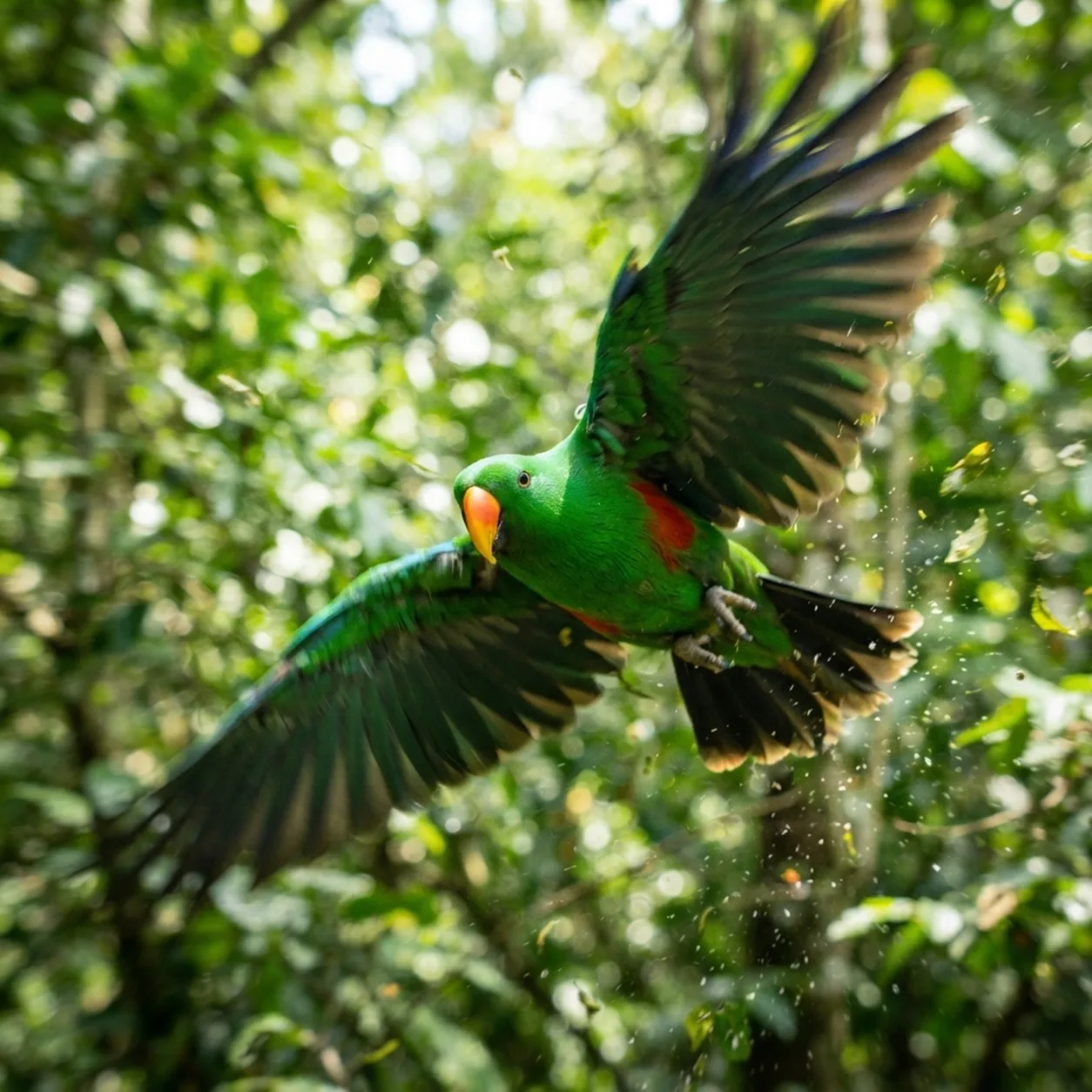
鹦鹉与凤头鹦鹉
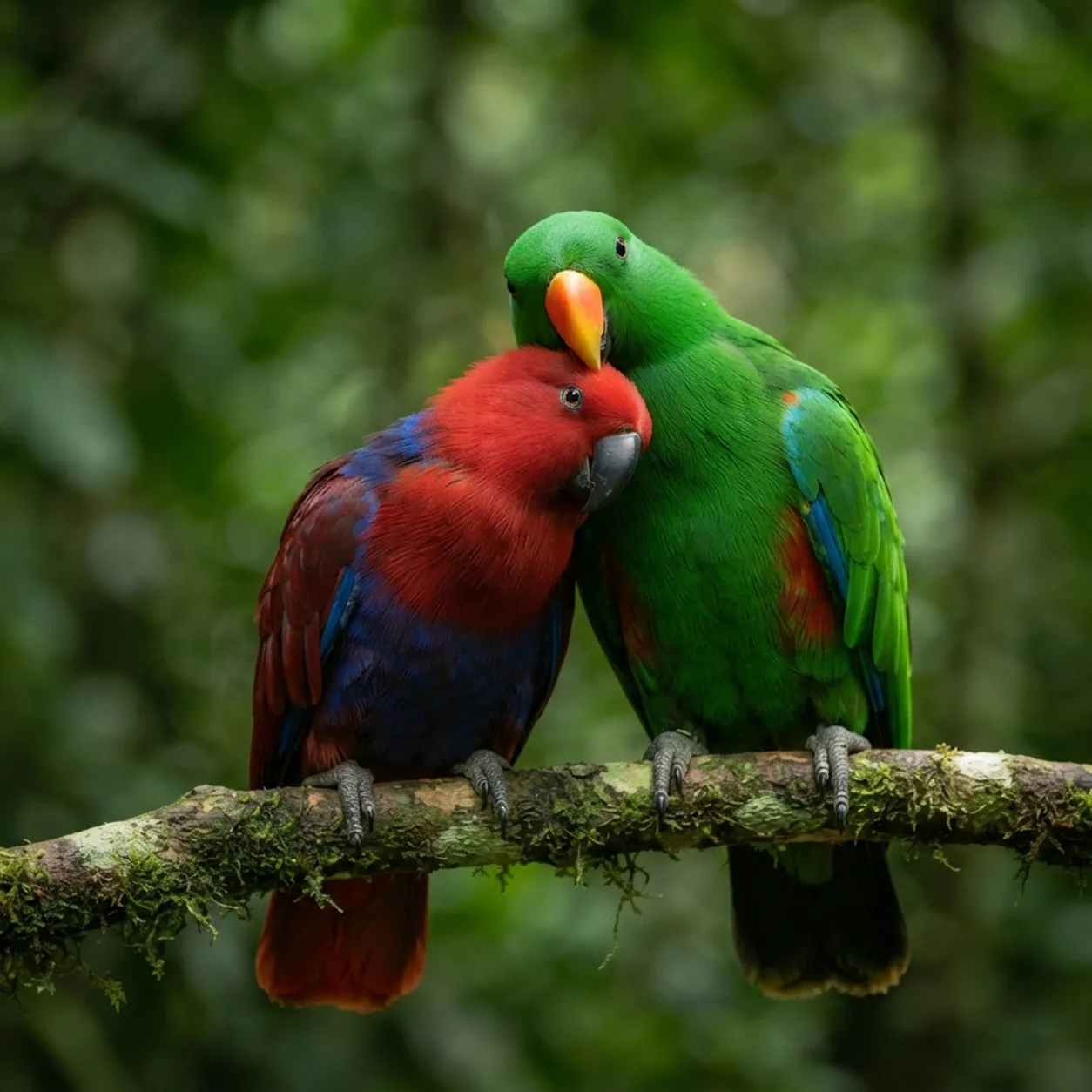
Significant physical differences between male and female (Sexual Dimorphism)
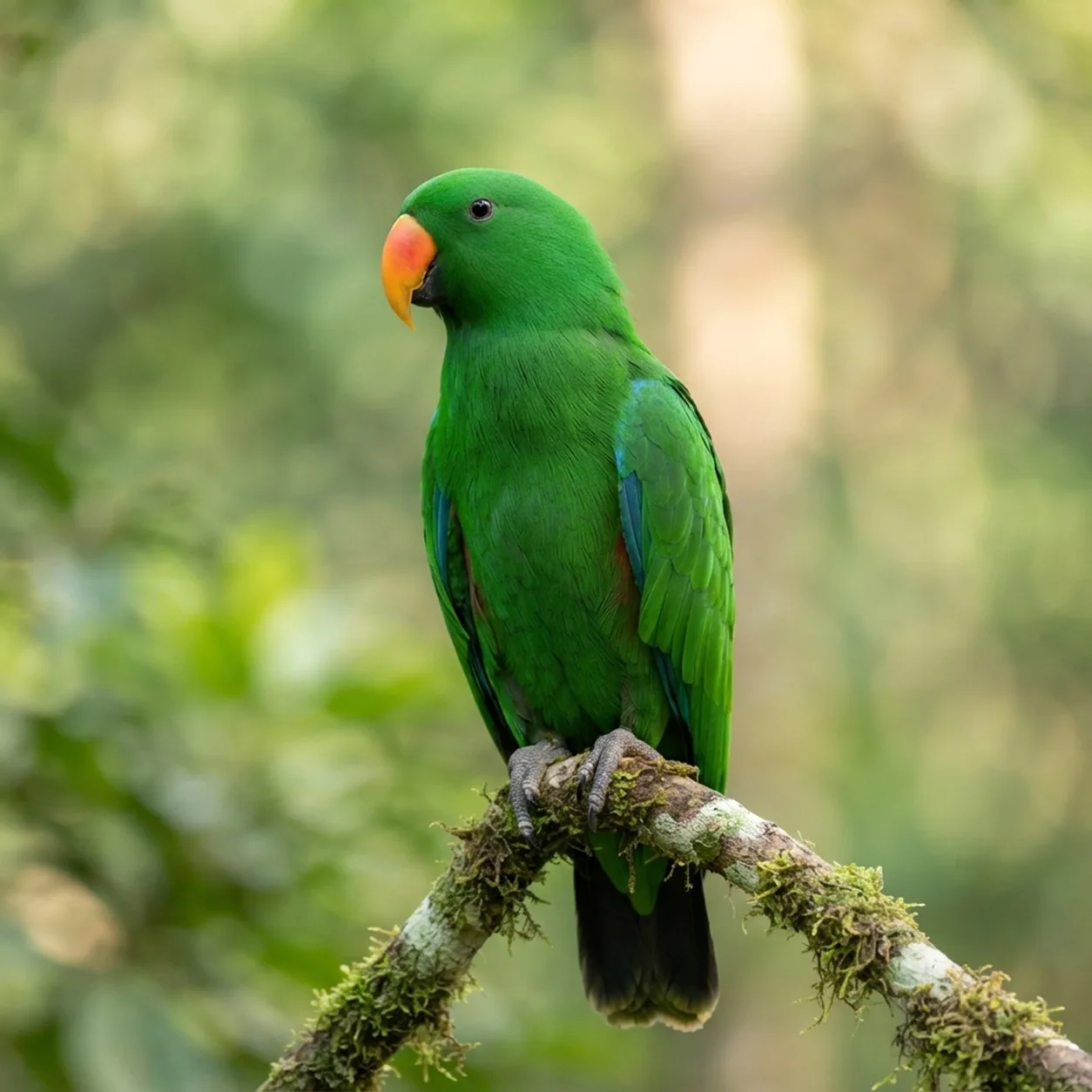
The Eclectus parrot (Eclectus roratus) is a medium-to-large parrot native to the rainforests and coastal areas of Oceania, including Australia, New Guinea, Indonesia, and the Solomon Islands. They are most famous for exhibiting extreme sexual dimorphism, meaning males and females look so radically different that early European ornithologists mistakenly classified them as two separate species.
Physical Characteristics
- Males: Covered in bright emerald-green plumage with blue and red accents under the wings and sides of the belly, paired with an orange/coral-pink and black bill.
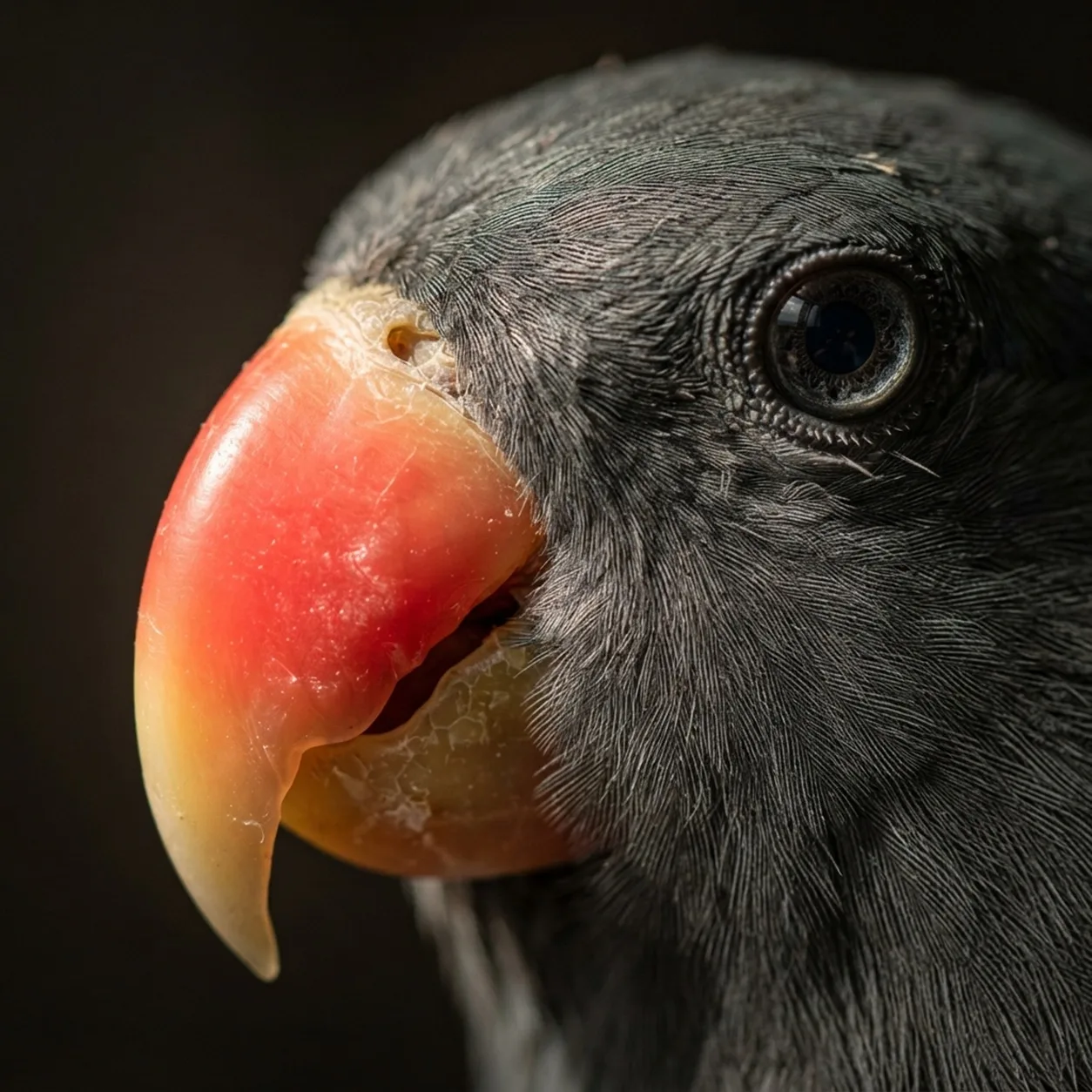
- Females: Predominantly vivid red with a deep blue or purple belly band and a completely black bill.
- Size: Adults grow to roughly 12 to 14 inches (31–37 cm) in length and typically weigh between 13 and 19 ounces (375–550 grams).
- Lifespan: They have an average captive lifespan of 30 to 40 years, though they can live up to 50 years in the wild.
Behavior and Personality
- Temperament: Known as calm, observant, and independent companions rather than high-energy, constant cuddlers. They can be somewhat timid or reserved.
- Handling: Many individual Eclectus parrots do not enjoy being excessively touched or handled, and overhandling can trigger hormonal stress.
- Vocalizations: While generally quieter than many other parrot species during downtime, they can emit a very loud squawk and are excellent mimics capable of learning an extensive vocabulary with a surprisingly human-sounding voice.
Specialized Care and Diet
- High-Fiber Diet: Eclectus parrots possess an unusually long digestive tract compared to other hookbills. Their diet should consist heavily of fresh fruits, leafy dark vegetables, sprouts, and high-fiber produce (such as papaya, pomegranate, and figs), with a very small portion dedicated to natural pellets.
- Avoid Artificial Additives: Processed foods, artificial colorings, and synthetic vitamin supplements can cause severe neurological and physical issues in this species, most notably toe-tapping, wing-flipping, and feather-plucking.
- 分类
- 鹦鹉与凤头鹦鹉