
Pileated Gibbon
Hylobates pileatus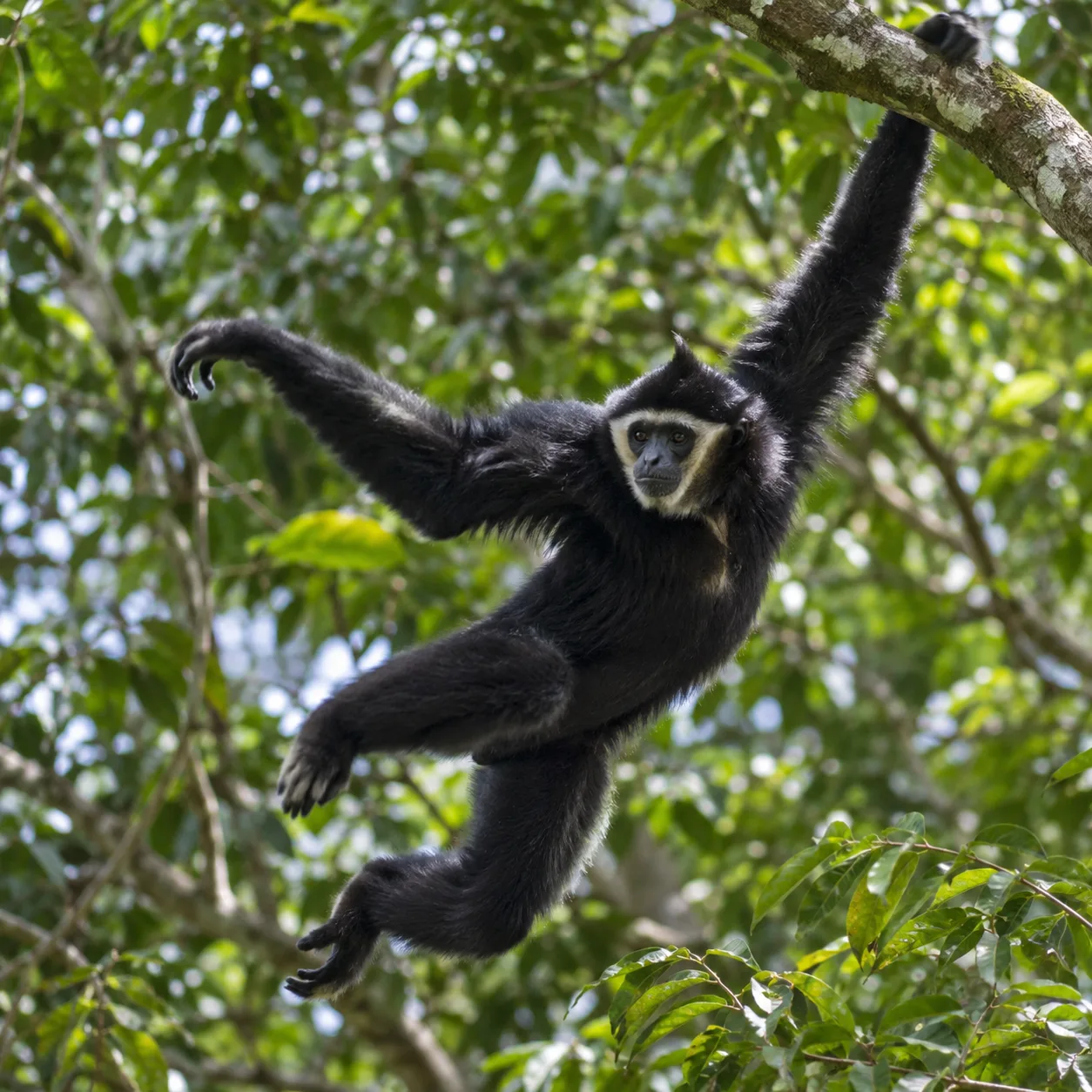
灵长类
Female and male lions are clearly different (Sexual Dimorphism)
The pileated gibbon (Hylobates pileatus), also called the capped or crowned gibbon, is an endangered primate native to Southeast Asia, specifically Cambodia, Thailand, and a small portion of Laos.
Physical Characteristics and Sexual Dimorphism
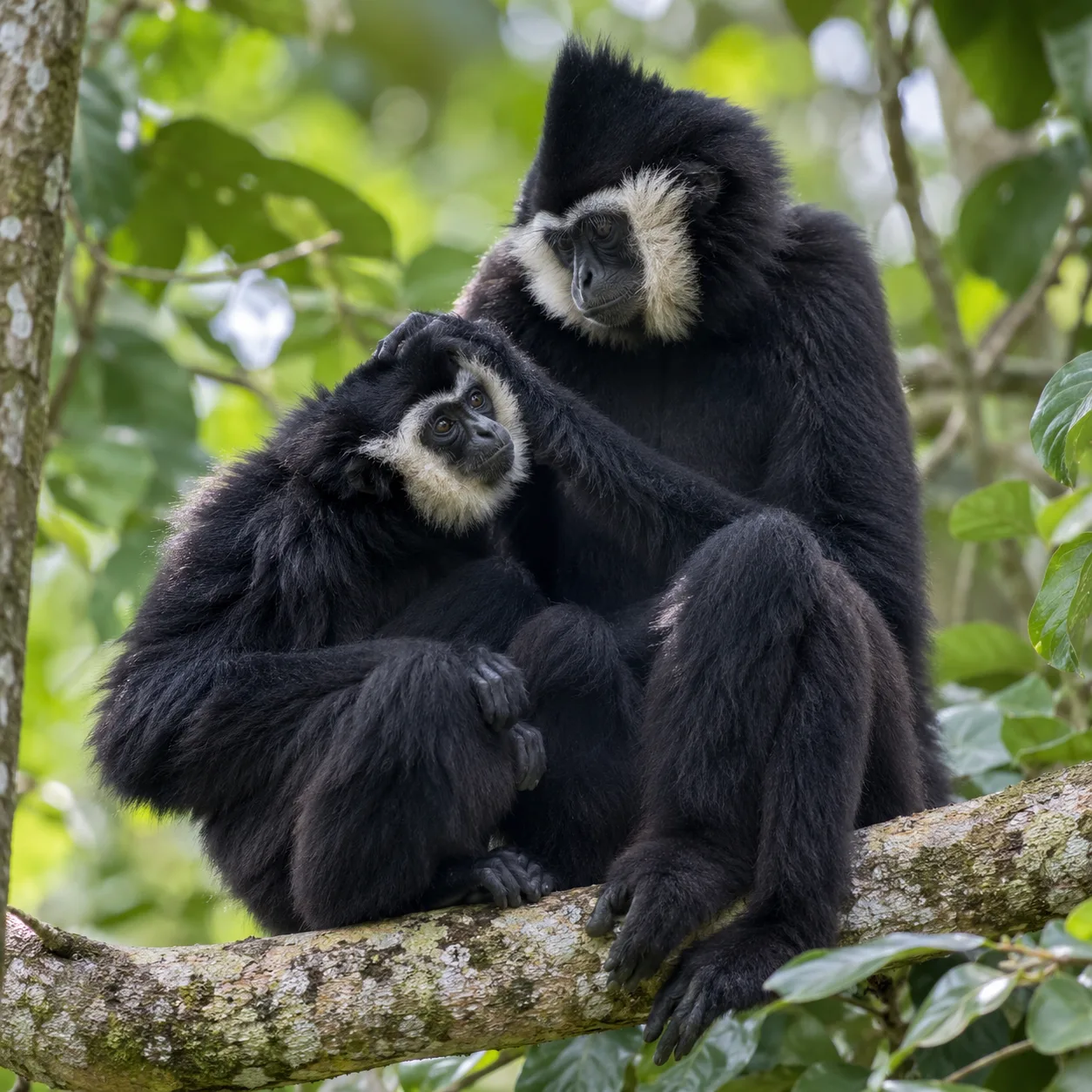
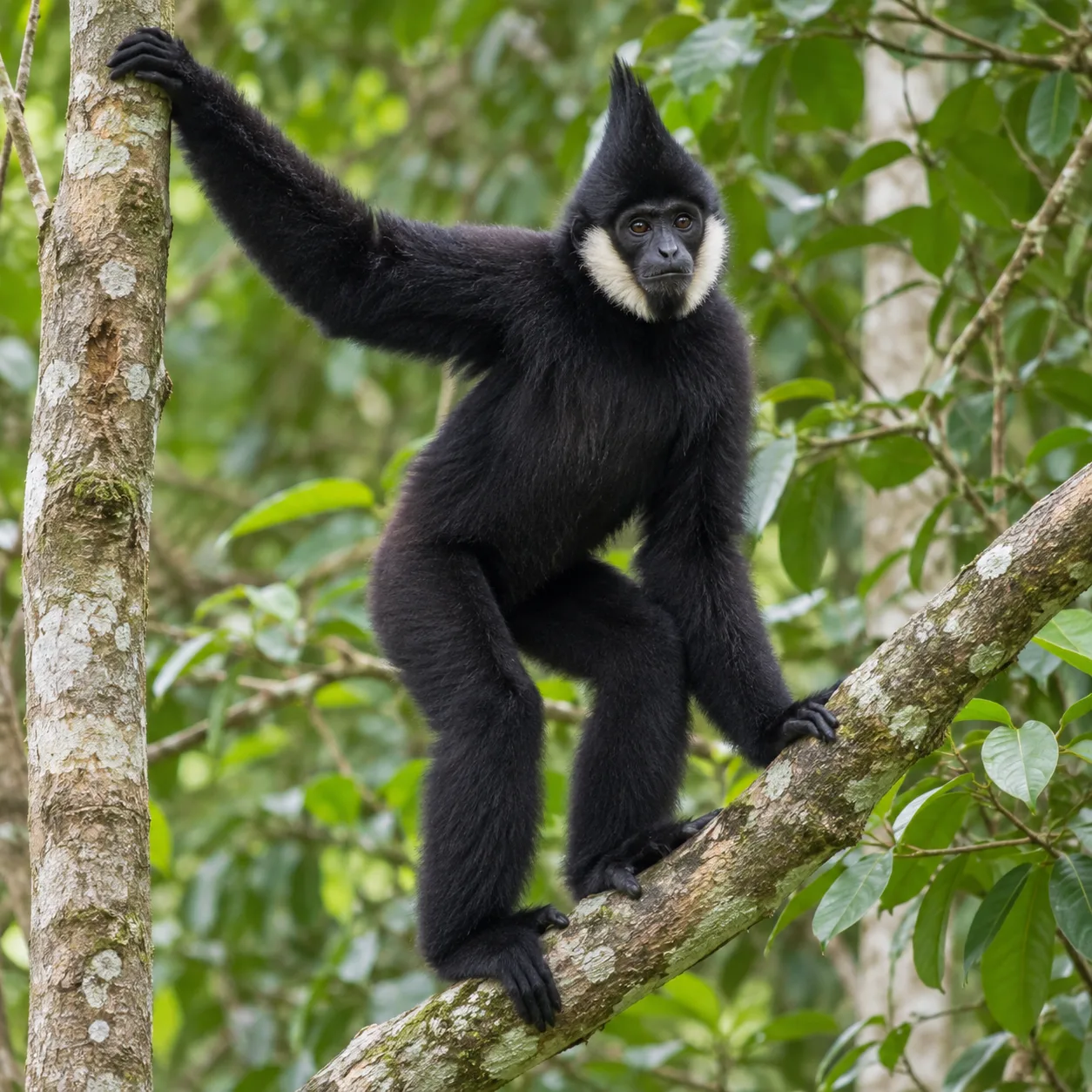
- Coat Coloration: This species displays strong sexual dimorphism. Adult males have purely black fur, while adult females and juveniles are buff-colored or light grey-white with a distinct black cap on their head and a black chest patch.
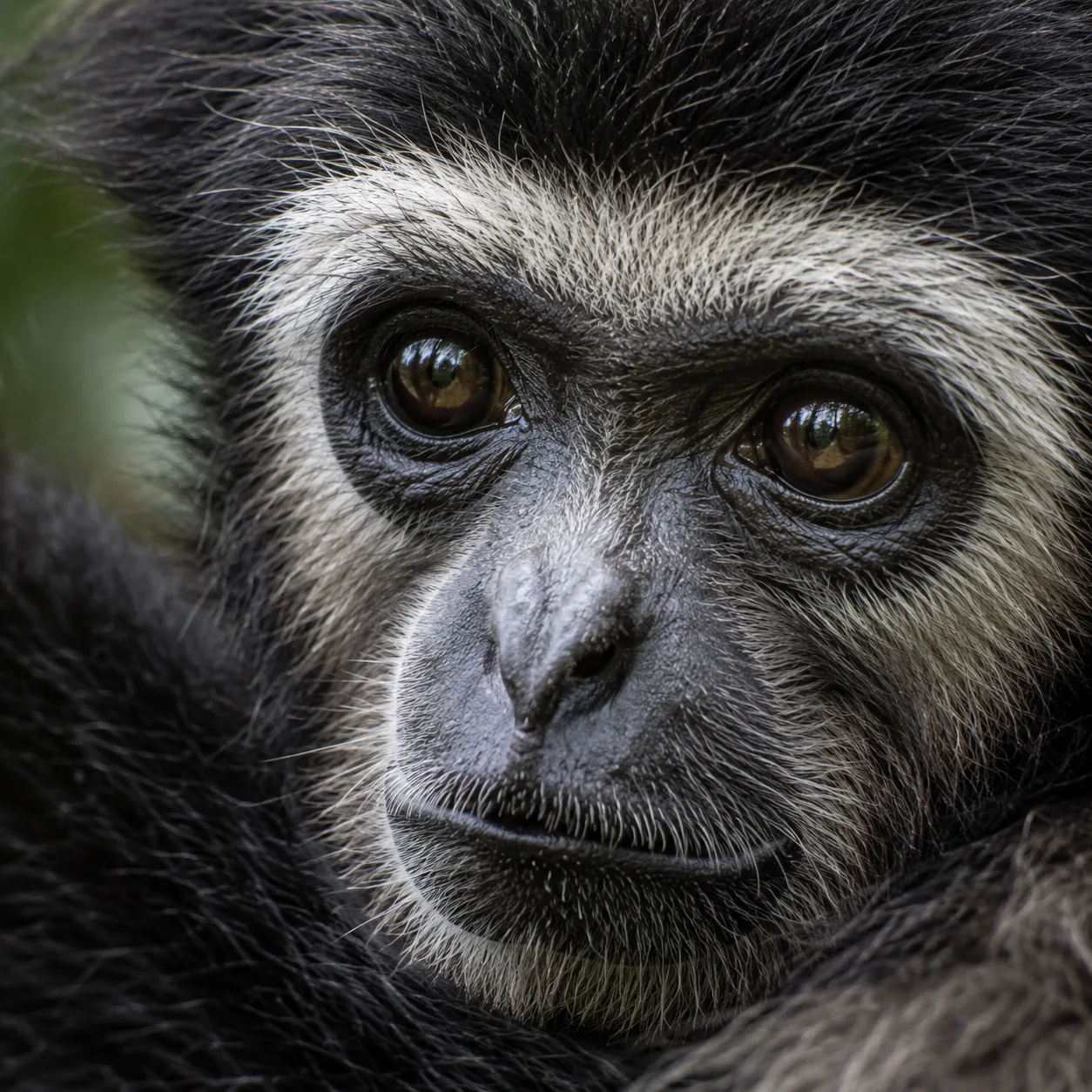
- Facial Ring: Both sexes share a prominent, shaggy white ring of hair surrounding their dark face.
- Body Structure: Like all gibbons, they possess extremely long arms relative to their legs and lack a tail, specialized for swinging through the canopy.
Habitat and Geographic Distribution
- Range: They inhabit the region east of the Salween River and west of the Mekong River, covering southeastern Thailand, southwestern Laos, and western/northern Cambodia. The Cardamom Mountains in southwestern Cambodia serve as a critical stronghold for a large portion of the remaining population.
- Environment: They prefer lush, seasonal evergreen and mixed deciduous-evergreen primary forests, scaling up to elevations of about 1,500 meters.
Behavior and Diet
- Social Structure: Pileated gibbons are strictly monogamous, living in small, territorial family groups made up of a bonded breeding pair and their immature offspring.
- Communication: Pairs defend their home range boundaries by performing loud, complex duets and calls.
- Diet: They are primarily frugivorous, meaning fruit makes up the vast majority of their diet—with a strong preference for figs and soft-skinned berries—alongside leaves, shoots, and occasional insects.
Conservation Status and Threats
- Status: Listed as Endangered on the IUCN Red List and protected under CITES Appendix I.
- Core Threats: Populations face continuous decline driven by wide-scale deforestation, conversion of seasonal forests to agriculture, and illegal poaching for the pet trade and bushmeat. Local rehabilitation and rescue efforts—such as those at Cambodia's Phnom Tamao Wildlife Rescue Centre—work to rescue and reintroduce confiscated individuals.
- 分类
- 灵长类