

White Crocodile
Albino Crocodile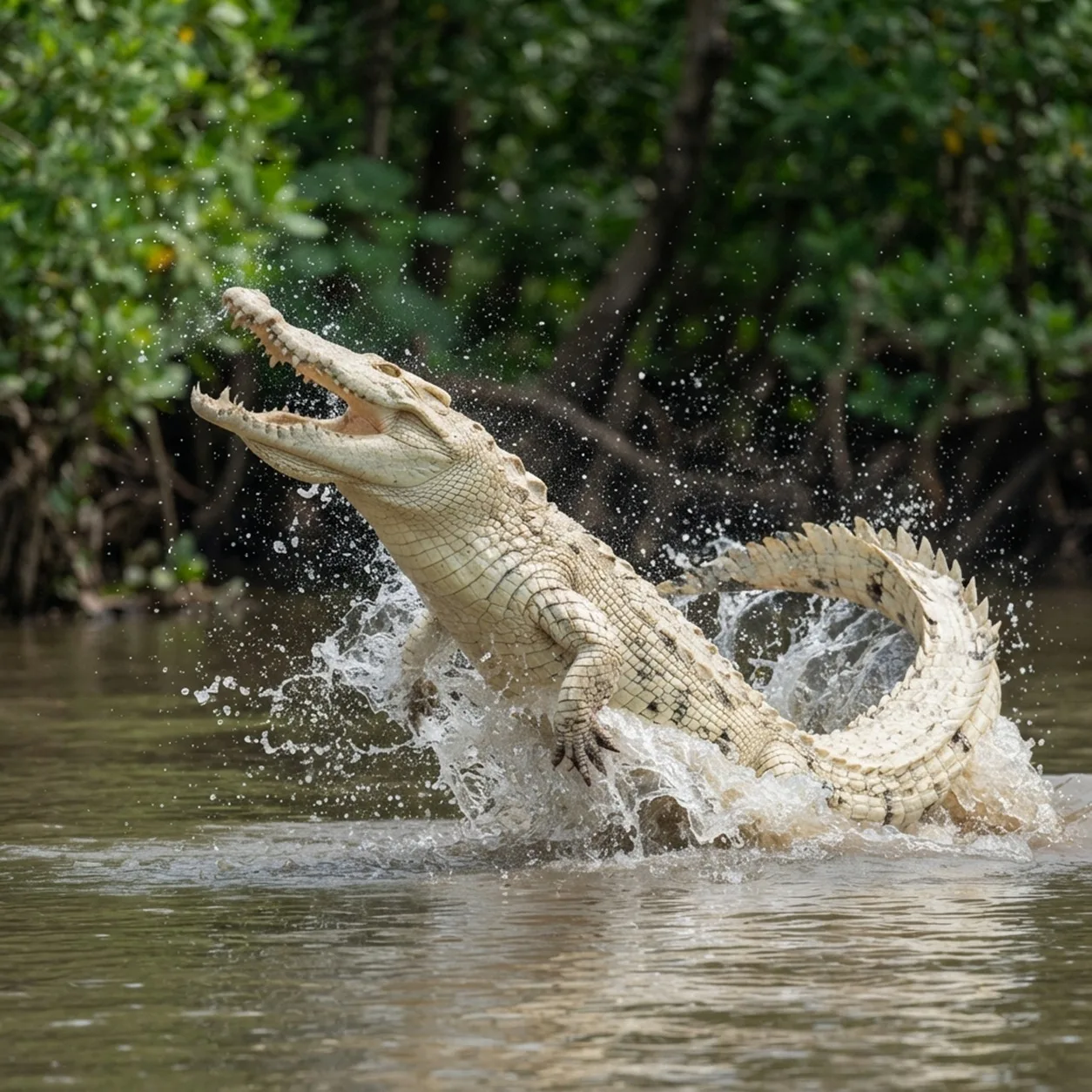
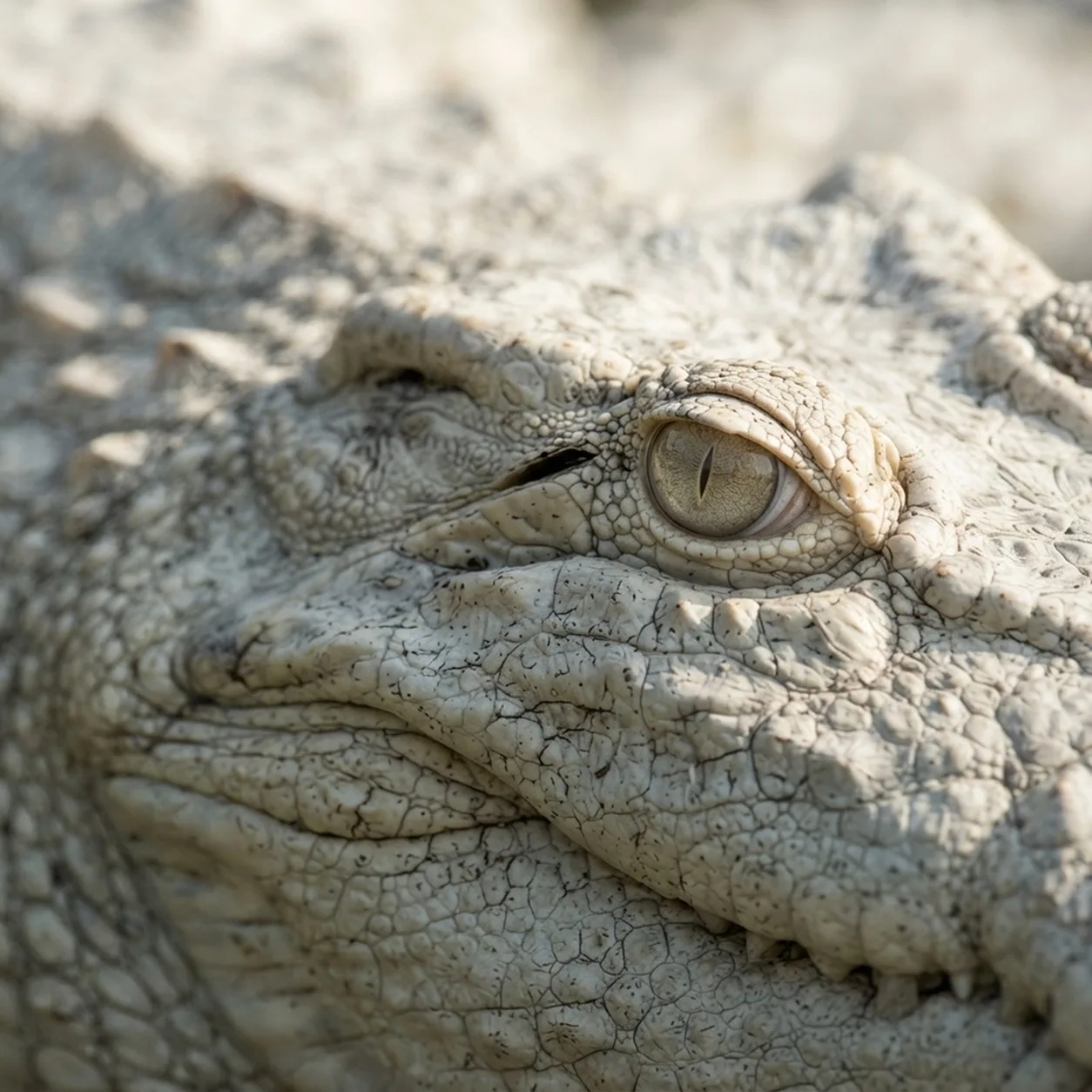
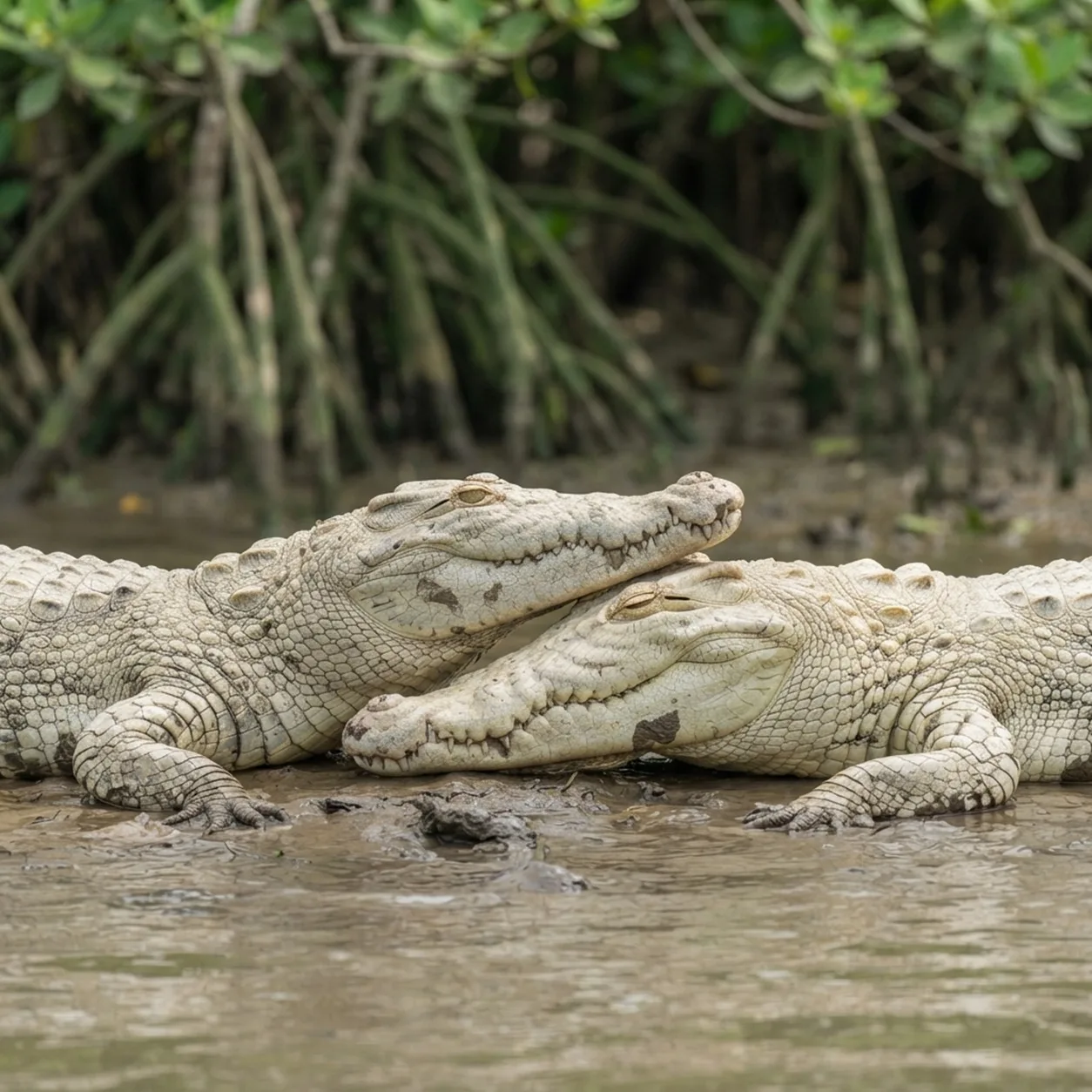
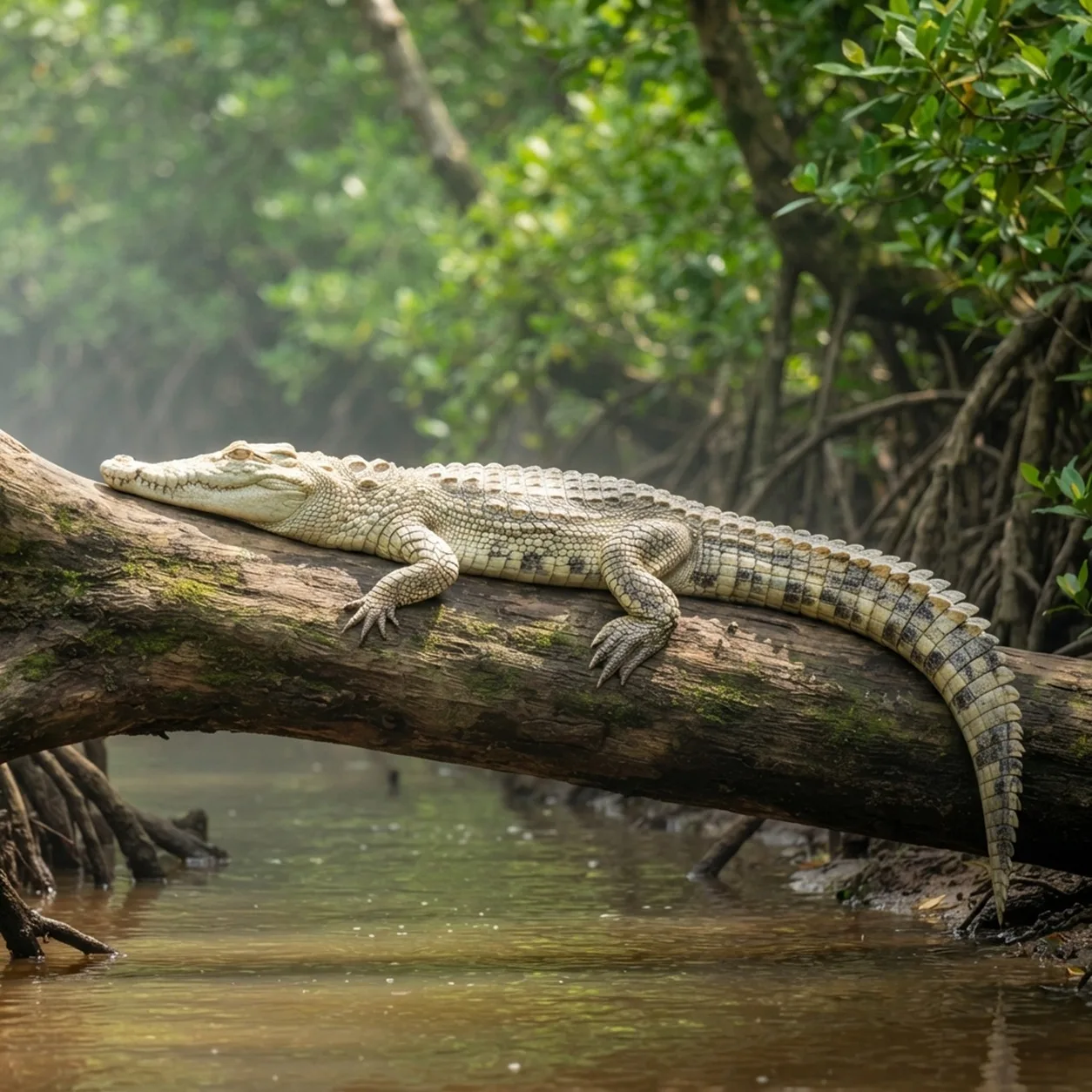
Is one of the rarest and most visually striking reptiles in the world
The white crocodile—most commonly known as the albino crocodile or leucistic crocodile—is one of the rarest and most visually striking reptiles in the world.
Here are the key facts about these unique creatures:
1. Why Are They White?
Their white coloration is caused by a genetic mutation from birth, which falls into two distinct categories:
- Albino Crocodiles: They have a complete lack of melanin (skin pigment). Their skin is pure white or ivory, and their eyes are a distinctive pink or red.
- Leucistic Crocodiles: They suffer from a partial loss of pigmentation. They have translucent white skin, but their eyes are a beautiful, piercing blue. They may also have a few dark spots on their skin.
2. Survival Challenges in the Wild
In the wild, white crocodiles rarely survive to adulthood due to several harsh realities:
- Lack of Camouflage: Their bright white skin makes them an easy target for predators (like large birds or bigger fish) when they are hatchlings. It also makes it incredibly difficult for them to sneak up on prey.
- Sun Sensitivity: Their unpigmented skin is highly sensitive to direct sunlight, making them prone to severe sunburns. Their eyesight is also significantly weaker in bright daylight.
3. Where Are They Found?
Because of their vulnerability, almost all living white crocodiles are housed in zoos or wildlife sanctuaries, where they are kept in shaded environments to protect their skin and eyes. In Cambodia, they occasionally make headlines when a rare white hatchling is born on a local crocodile farm.
In many Asian cultures, including Cambodian folklore, a white crocodile is traditionally revered as a "King Crocodile" or a sacred spirit, believed to bring immense luck and power due to its extreme rarity.
- 分类
- 爬行动物