

Wreathed Hornbill
Rhyticeros undulatus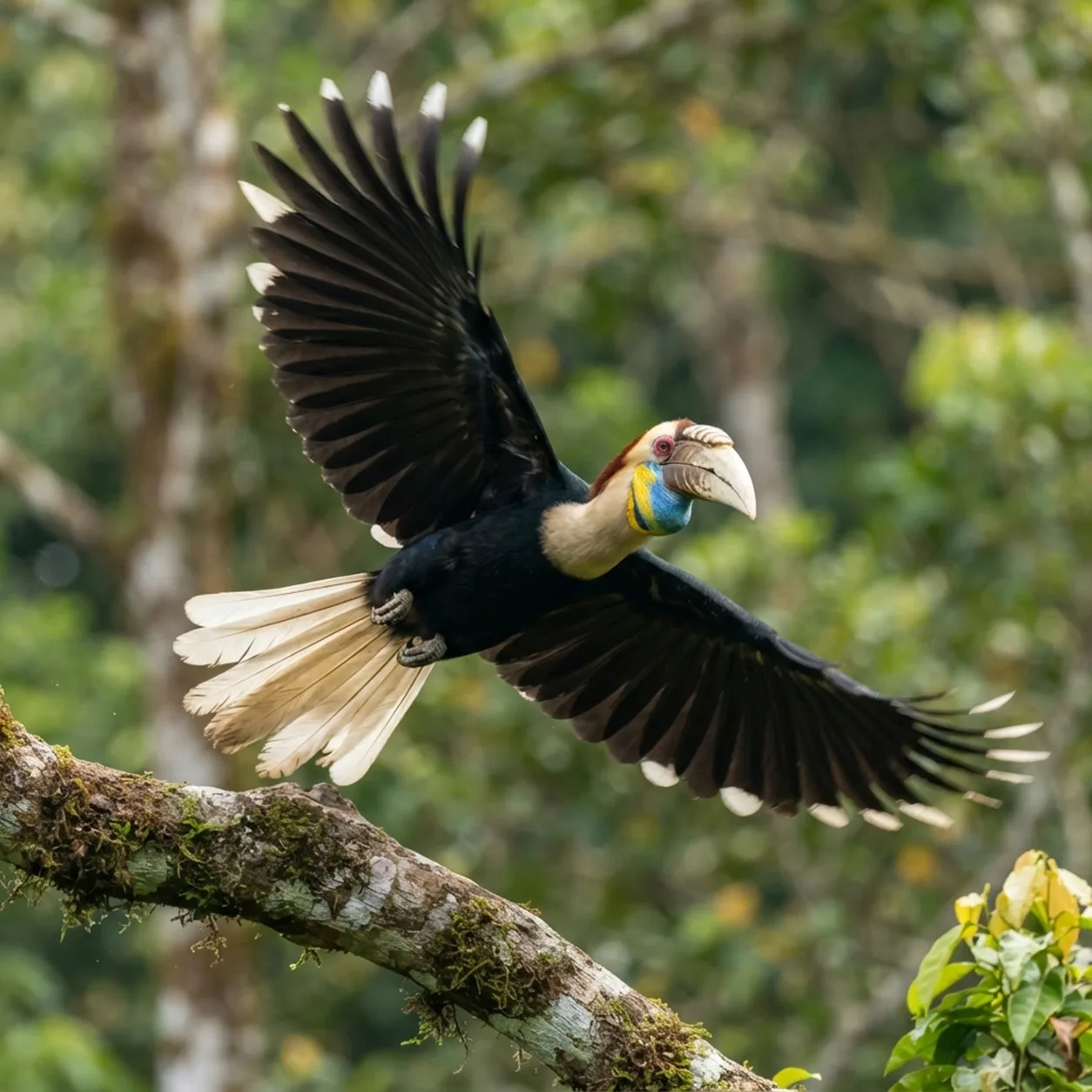
犀鸟
A large and beautiful rainforest bird in the genus Bucerotidae.
The wreathed hornbill (Rhyticeros undulatus), also known as the bar-pouched wreathed hornbill, is a large, majestic tropical bird of the hornbill family Bucerotidae native to the forests of South and Southeast Asia.
Physical Characteristics
- Size and Weight: Adults measure 75 to 100 cm (30 to 39 in) in length. Males weigh 1.8 to 3.65 kg (4.0 to 8.0 lb), while females are slightly smaller, weighing 1.36 to 2.7 kg (3.0 to 6.0 lb).
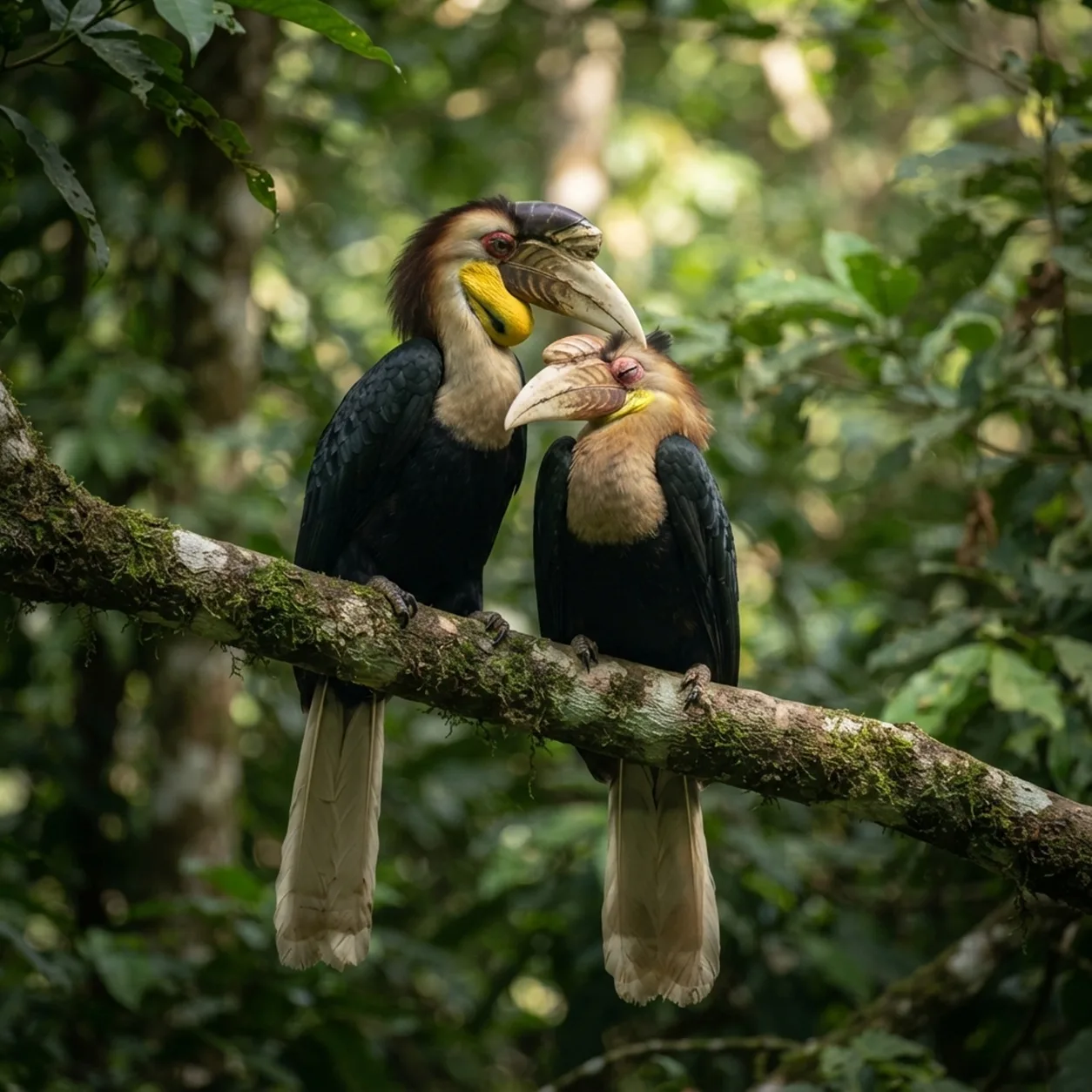
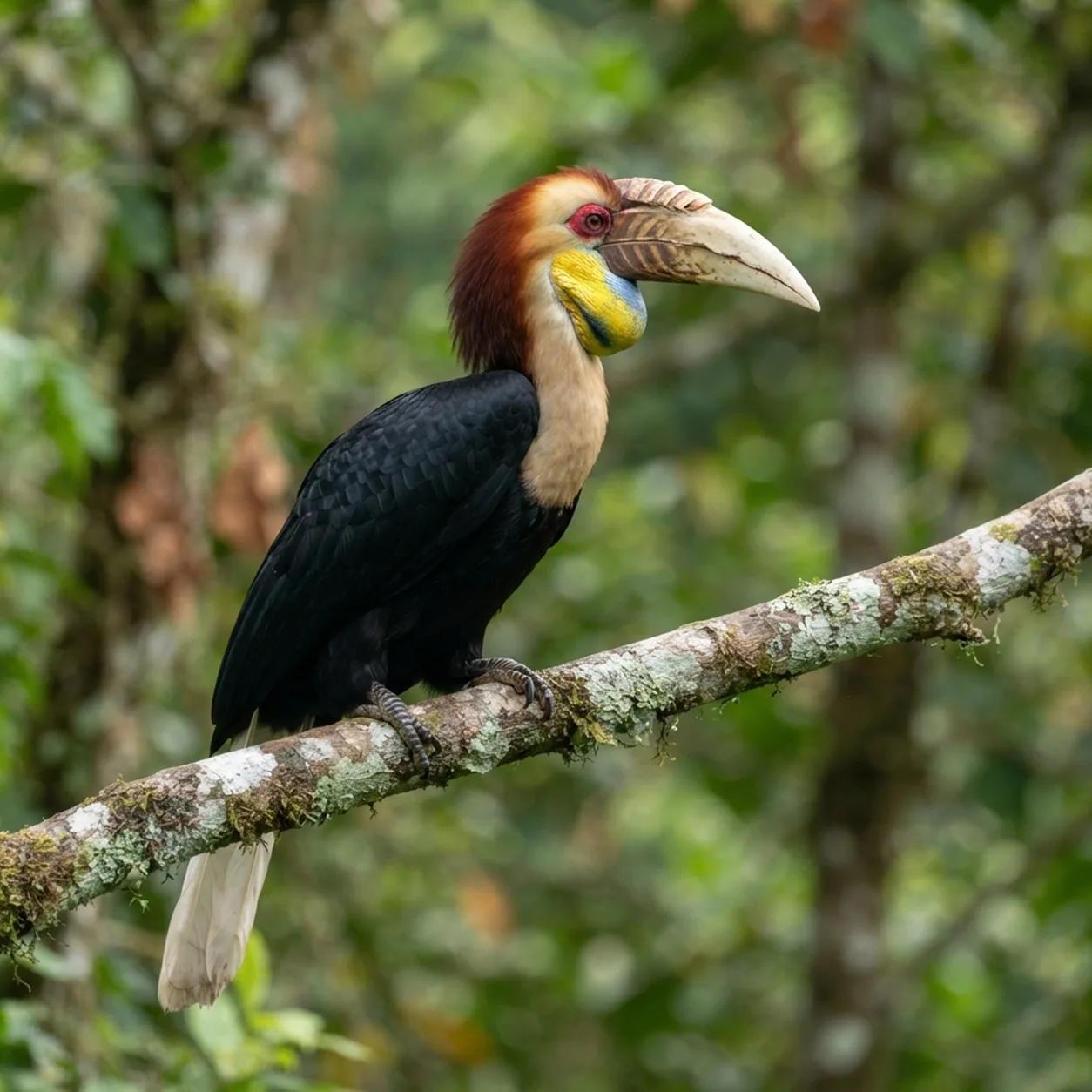
- Plumage and Sexual Dimorphism: Both sexes feature a mostly black body with a striking, long snow-white tail. They show clear differences in head coloration and throat pouches:
- Males: Have a creamy-white face and neck, a rufous crown, and a prominent, bright yellow inflatable throat pouch (gular skin) marked with a distinct blue-black central bar.
- Females: Have a uniformly black head and neck with a vibrant blue throat pouch.
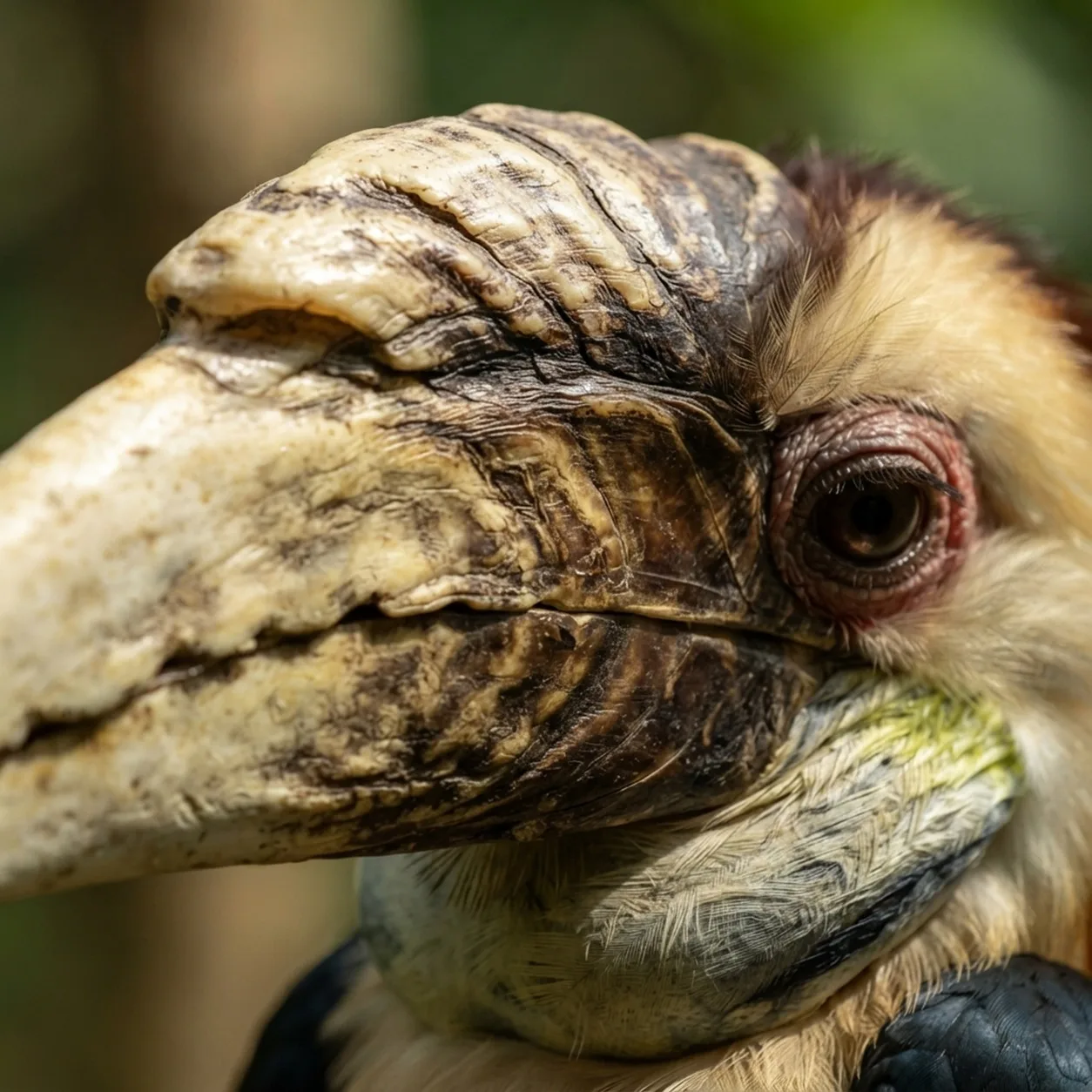
- Bill and Casque: Both possess a heavy, dull-white curved bill topped with a low, wrinkled or ridged bony casque that features wreath-like folds, giving the species its common name.
Habitat and Distribution
- Geographic Range: Found from northeastern India and Bhutan, running east through Myanmar, Thailand, Laos, Cambodia, Vietnam, and south into the Malay Peninsula and the Greater Sunda Islands of Indonesia (such as Sumatra, Java, and Borneo).
- Elevation Preferences: Inhabits extensive tracts of primary and mature evergreen or moist deciduous rainforests, primarily in foothills and montane forests up to 2,560 meters (8,400 ft) in elevation.
Diet and Ecological Role
- Primary Frugivore: Feeds mainly on large forest canopy fruits, with figs making up the majority of its diet alongside lipid-rich drupes.
- Ballistic Food Transport: Uses a feeding technique where it catches large fruit at the tip of its bill, snaps its head back, and swallows the fruit whole to protect seeds and access resources larger frugivores cannot eat.
- Seed Dispersal: Acts as a vital keystone "forest farmer," flying long distances (up to 10 km between feeding and excretion) to spread intact seeds and maintain diverse rainforest ecosystems.
- Omnivorous Supplement: Consumes small animals like insects, crabs, snails, reptiles, and bird eggs and nestlings, mostly during the breeding season for extra protein.
Breeding and Behavior
- Social Habits: Highly arboreal, active in social pairs or medium-to-large flocks, and known for the loud, powerful thrumming sound of their wings in flight.
- Unique Nesting: Uses natural cavities in tall, old-growth trees 18 to 28 meters off the ground. The female seals herself inside the cavity using mud, droppings, and fruit scraps, leaving a narrow vertical slit.
- Male Provisioning: The male feeds the enclosed mother and growing chick through the tiny slit for months until the young are fully ready to fledge.
Conservation Status
- Vulnerable Species: Listed as Vulnerable
- 分类
- 犀鸟